Ueno and Asakusa are one of the easiest ways to get the “classic Tokyo” feeling in a single, low-stress day: green park paths and markets in the morning, temple streets and old-town atmosphere in the afternoon, then a simple evening choice that turns the day into a finale—Tokyo Skytree from above or the Sumida River from the water.
If you’re using this as one chapter of a bigger Tokyo plan, it pairs beautifully after a more modern day (like Harajuku–Shibuya–Shinjuku). This guide is your complete step-by-step route for Ueno → Asakusa → (Skytree or Sumida River), and it also links out to focused deep dives when you want more detail without cluttering the main flow.
Our step-by-step guide makes navigating between them easy and even helps you choose your finale: will you be combining Asakusa and Skytree for stunning city views, or winding down on a gentle river cruise? Let’s build your perfect Tokyo day trip.
How to Travel Like a Local: Your Guide to Getting Around Tokyo
Transporting in Tokyo
Navigating Tokyo’s famous train system can seem daunting, but it’s surprisingly easy with a Suica or Pasmo card. Think of it as a rechargeable debit card for travel; you just tap it on the gate reader to enter and exit stations. You can buy one at any major station from ticket machines with an English language option.
Here’s how to get your card:
- Find a ticket machine and select “English.”
- Choose “Purchase new Suica” or “Purchase new Pasmo.”
- Pay the ¥500 refundable deposit and add some starting funds (¥2,000 is a good start).
For this itinerary, getting from Ueno to Asakusa is a breeze. Simply tap your card and take the Tokyo Metro Ginza Line. It’s a quick 5-minute ride that costs less than ¥200.
Stay connected (so this itinerary stays easy)
You’ll rely on Google Maps for station exits, train transfers, and walking routes—especially between Ueno, Asakusa, and your evening option—so having reliable data makes the whole day feel effortless. Genki Mobile offers three simple ways to stay online in Japan:
- Pocket Wi‑Fi: Best for groups or multiple devices (everyone connects to one hotspot). Great if you’re hopping between maps, translation, and uploads all day.
- eSIM: Best if your phone supports eSIM and you want the lightest setup (no extra device). Quick to activate and ideal for solo travelers.
- Physical SIM card: Best if you prefer a traditional swap-in option or your phone doesn’t support eSIM.
With dependable data, you can navigate busy stations, double-check temple hours, and time your walk to Skytree or the Sumida River boat without stress.
Now that you’re ready to travel like a local, let’s start the day.
Morning in Ueno Park: Culture, Markets, and Nature
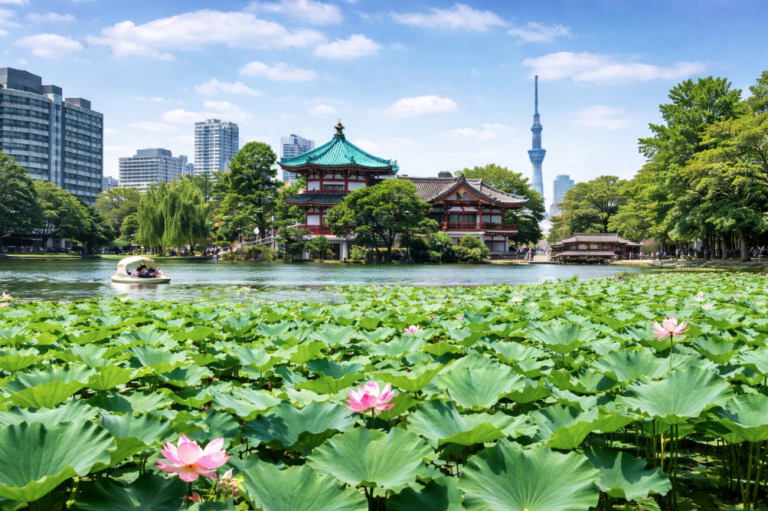
Your day begins at Ueno Station, the gateway to Ueno Park, a sprawling green space often called Tokyo’s cultural heart. You don’t need to go inside every museum to soak up the atmosphere. Simply enjoy a peaceful walk past the grand museum buildings and find your way to Shinobazu Pond, a massive lily pond with a temple on an island at its center. It’s the perfect, relaxed start to your day.
Just on the edge of the park’s calm, you’ll discover the complete opposite: Ameya Yokocho Market. This bustling outdoor market, often called Ameyoko, runs along and under the elevated train tracks. The energy here is electric, with vendors shouting out deals and crowds of shoppers weaving through narrow lanes packed with everything from fresh seafood and exotic fruits to discount sneakers and cosmetics.
This is the perfect spot to feel the lively pulse of old-school Tokyo and grab an adventurous snack. The mix of sights, sounds, and the smell of grilled street food is an unforgettable experience.
If you want a more deep-dive guide to Ueno station:
We wrote a separate deep-dive guide to Ueno station. Check out our blog Discover Ueno: Park, Zoo & Cultural Gems
Once you’ve had your fill of the market’s wonderful chaos, it’s time to hop on the Ginza Line for our next stop.

How to Get from Ueno to Asakusa: The 5-Minute Subway Secret
The trip from Ueno’s lively market to Asakusa’s historic temple couldn’t be easier. While you could walk, the best way is a quick ride on the Tokyo Metro Ginza Line. This direct connection is key to this one-day itinerary, saving you time and energy for more sightseeing.
Inside the station, follow the signs for the Ginza Line—it’s marked with a bright orange circle and the letter ‘G’. Your journey is just three stops, from Ueno (station G16) to the final stop, Asakusa (G19), taking only about five minutes. For around ¥180, it’s a fantastically cheap and simple hop. As you emerge from the subway, you’re ready for your first glimpse of old Tokyo.
Afternoon in Asakusa: Stepping into Old Tokyo at Senso-ji Temple
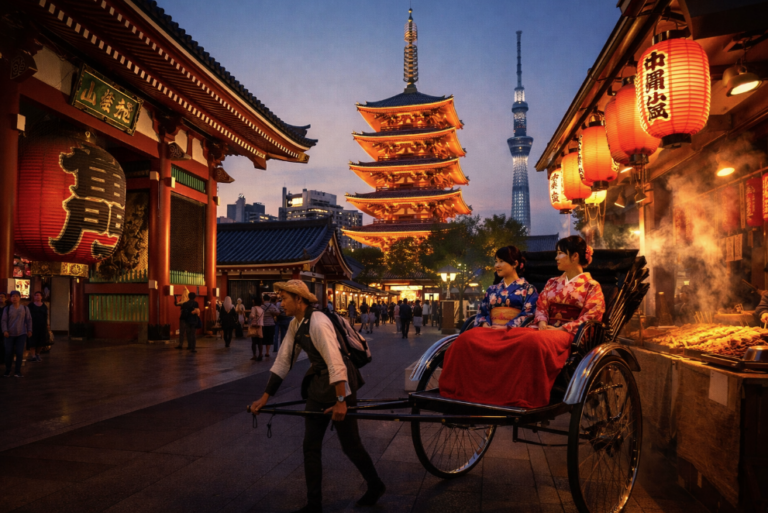
A short ride on the Ginza Line transports you from Ueno’s parkland to the traditional heart of Asakusa. One of the first attractions you’ll see is the magnificent Kaminarimon, or “Thunder Gate.” You can’t miss its giant red lantern, an iconic symbol of Tokyo that serves as the grand entrance to the grounds of Senso-ji Temple. It’s the perfect spot for a quintessential photo.
Passing through the gate, you’ll find yourself on Nakamise-dori, a bustling pedestrian street leading to the temple. This historic walkway is packed with small stalls selling traditional crafts, colorful souvenirs, and an incredible array of Japanese snacks. The vibrant energy here is a huge part of what makes a day trip to Asakusa so worthwhile, offering a fun glimpse into old-world commerce.
This path leads you directly to Senso-ji, Tokyo’s oldest and most significant Buddhist temple. Before the main hall, you’ll notice a large cauldron of incense. Many visitors gently wave the fragrant smoke over themselves, a simple gesture for good health and purification. It’s a peaceful way to participate in local custom before exploring the beautiful temple grounds.
If you want a more deep-dive guide to Asakusa station:
We wrote a more detailed guide separately. Check out: Asakusa Travel Guide: Temples, Culture & Cuisine
If you want your Asakusa time to feel extra special, consider renting a kimono before visiting Senso‑ji. Rental shops are clustered around Asakusa Station and Nakamise-dori, and many include dressing plus simple hairstyling. Aim to arrive a little earlier so you have time to get changed, then enjoy photos at Kaminarimon, along Nakamise-dori, and around the temple grounds. Just keep an eye on the return time—most of the shops require return around 5:30 PM.

Tokyo by Night: Choose Your View—Skytree Panorama or a Waterfront Cruise?
As dusk settles over Asakusa, the district transforms, offering two spectacular but very different ways to experience Tokyo at night. Your choice comes down to a simple question: do you want to see the city from above the lights, or from among them on the water? Both adventures begin right here, providing a perfect finale to your day.
Skytree
For an awe-inspiring panorama, look no further than the Tokyo Skytree, the colossal tower you’ve likely glimpsed all afternoon. A short walk or train ride from Senso-ji, its observation decks lift you over 350 meters (1,150 feet) into the air. From here, Tokyo becomes an endless carpet of glittering lights stretching to the horizon. It’s a breathtaking experience that captures the immense scale of the world’s largest metropolis.
For more information about Tokyo Skytree, price and tickets, check out our Quick Guide to Tokyo Skytree.
Sumida river cruise
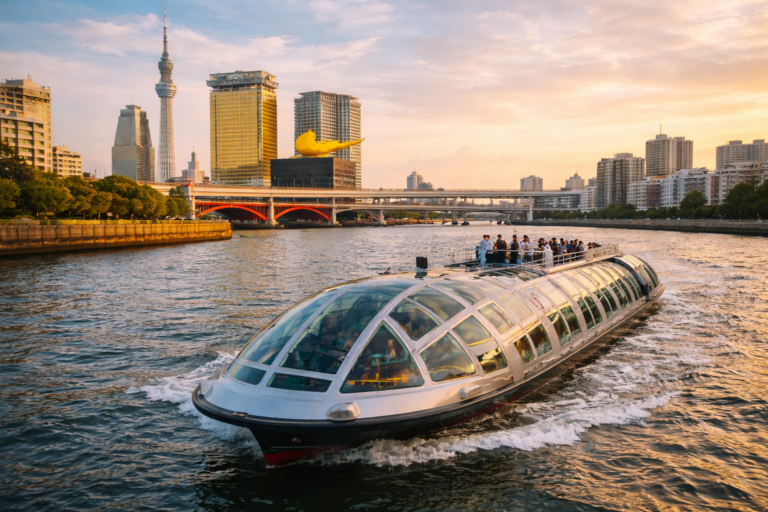
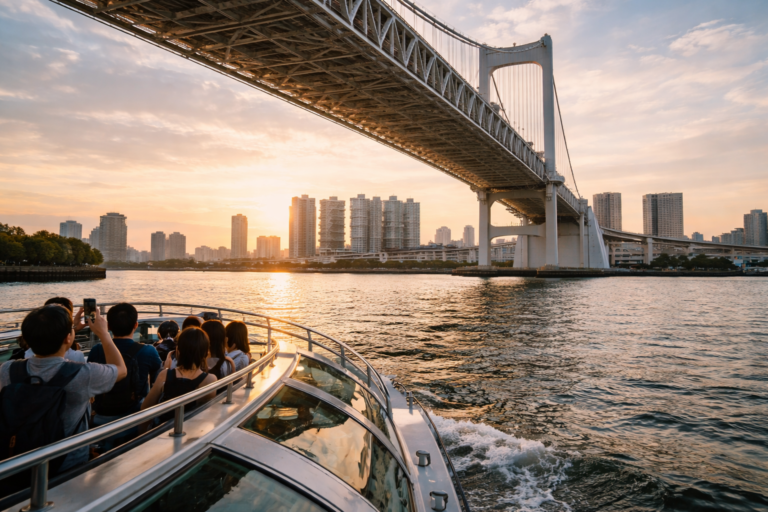
Alternatively, if a relaxing journey sounds more appealing, you can board a Sumida River Cruise from the Asakusa Pier. This futuristic-looking water bus glides down the river on a scenic route directly to Odaiba Seaside Park. You’ll drift past beautifully lit bridges and waterfront buildings, culminating in a stunning view of the illuminated Rainbow Bridge with the Tokyo skyline behind it. It’s a comfortable, cinematic way to see the city’s landmarks light up.
If you want a more in-depth guide for this route, check our “Guide for travelling through Sumida river from Asakusa to Odaiba Seaside Park”
You can also check out the General Guide for Sumida River Cruise Boats to learn more about these “Tokyo waterbuses”.
So, the choice is yours. Head to the Skytree if you want to feel on top of the world and see everything at once. Opt for the Sumida River cruise if you’d prefer to sit back and watch iconic sights float by from the water.

What to Remember for Your Trip
This itinerary transforms an overwhelming city into a seamless adventure, bridging the cultural calm of Ueno Park with the electric history of Asakusa in a single day. You now have a clear path to follow.
If you remember just one thing, make it this: wear your most comfortable walking shoes. From museum floors to temple grounds, you’ll be on your feet discovering the city, and happy feet are the foundation of a fantastic travel day.
With this plan and a simple transit card in your pocket, you have everything you need. All the guesswork is removed, leaving you free to explore and turn a map into wonderful memories.
If you want to learn more about Japanese culture and day trips, as well as an insider’s guide to how to enjoy your trip like a local, be sure to check out Genki Mobile’s Guide for Travelers!
Q&A
Question: What’s the quickest and easiest way to get from Ueno to Asakusa?
Short answer: Take the Tokyo Metro Ginza Line from Ueno (G16) to Asakusa (G19). It’s a direct, three-stop ride that takes about five minutes and costs around ¥180 (under ¥200). Inside the station, follow signs for the Ginza Line—look for the bright orange circle with the letter “G”—and just tap in and out with your transit card.
Question: How do I get and use a Suica or Pasmo card for this itinerary?
Short answer: At any major station, use a ticket machine, select “English,” then choose “Purchase new Suica” or “Purchase new Pasmo.” Pay the ¥500 refundable deposit and load funds—¥2,000 is a good start. Tap the card at the gate to enter and exit stations. It works seamlessly across Tokyo’s trains, making moves like Ueno → Asakusa effortless.
Question: What are the must-see highlights in Ueno and Asakusa on this one-day route?
Short answer: In Ueno, stroll the park past grand museum buildings and don’t miss Shinobazu Pond with its island temple. Then dive into Ameya Yokocho (Ameyoko) Market for old-school energy, street snacks, and lively vendors under the tracks. In Asakusa, start at Kaminarimon (the Thunder Gate with the giant red lantern), walk Nakamise-dori for crafts and treats, then visit Senso-ji Temple—many visitors waft incense smoke over themselves for good health before exploring the grounds.
Question: For the evening, should I choose Tokyo Skytree or a Sumida River cruise?
Short answer: Pick Skytree if you want a jaw-dropping panorama from observation decks over 350 meters up—a short walk or train hop from Senso-ji—with Tokyo’s lights stretching to the horizon. Choose the Sumida River cruise if you prefer a relaxing water-level view: depart Asakusa Pier, glide under illuminated bridges, and arrive at Odaiba Seaside Park with a cinematic view of the Rainbow Bridge and skyline. Both start from Asakusa; it’s “above the lights” vs. “among the lights.”
Question: How can I stay connected to make navigation between sights stress-free?
Short answer: Use mobile data so Google Maps can guide you to the right station exits, transfers, and walking routes (including to Skytree or the Sumida boat). Genki Mobile offers three easy options: Pocket Wi‑Fi (best for groups/multiple devices), eSIM (best for supported phones and a light setup), and physical SIM (best if your phone doesn’t support eSIM or you prefer a traditional swap). Reliable data keeps the day smooth and on-time.