In a city defined by futuristic skyscrapers and neon-drenched crossings, how do you find its soul? You travel back in time. Welcome to Asakusa, the historic heart of Tokyo, where ancient temples stand tall, rickshaws glide down narrow streets, and the air smells of incense. It is the essential contrast to modern Tokyo, offering a glimpse into a world that feels centuries away from the bustling metropolis surrounding it.
Asakusa is where Tokyo’s past feels close enough to touch—massive lantern gates, traditional shopping lanes, incense drifting through the air, and a steady rhythm of people moving toward Senso‑ji. It’s iconic, but it’s also very walkable once you know the simple order of sights.
You may be coming here as the second chapter of our Ueno → Asakusa day itinerary, right after a morning in Ueno. This guide focuses only on Asakusa—how to experience Senso‑ji and its surrounding streets at an enjoyable pace—and then points you back to the itinerary for your evening decision: Skytree panorama or a Sumida River cruise.
Stay connected in Asakusa (a quick tip before you start exploring)
Asakusa is very walkable, but a reliable connection makes it noticeably easier—especially when you’re navigating the busy area around Asakusa Station, checking Senso-ji hours, translating menus on Nakamise-dori, or timing a Sumida River boat departure. Having data on hand also helps when you’re coordinating a kimono rental return time or finding a quieter side street once the main approach gets crowded.
If you haven’t sorted connectivity yet, Genki Mobile is a simple option with three common setups:
- Pocket Wi‑Fi: Best for groups or multiple devices (everyone connects to one hotspot). Great if you’re hopping between maps, translation, and uploads all day.
- eSIM: Best if your phone supports eSIM and you want the lightest setup (no extra device). Quick to activate and ideal for solo travelers.
- Physical SIM card: Best if you prefer a traditional swap-in option or your phone doesn’t support eSIM.
With that handled, you can focus on Asakusa’s best parts—temple atmosphere, street snacks, and little cultural details—without the small friction of going offline at the exact moment you need directions.
Your First Steps: Navigating Asakusa’s Iconic Thunder Gate (Kaminarimon)
Your first encounter with Asakusa will almost certainly be its iconic entrance: the Kaminarimon, or “Thunder Gate.” Let’s find out more about this iconic gate.
Who are the statues at Kaminarimon?
Before you rush through, take a moment to look at the fierce statues housed on either side. These are the guardians of the temple who have stood watch for centuries, protecting the sacred grounds from storms and evil spirits.
- On the right side of the gate you can see Fūjin: The god of wind
- On the left side of the gate you will see Raijin: The god of thunder
Why is the red lantern famous?
The gate’s most famous feature, however, is its colossal red lantern. Weighing nearly 1,500 pounds (700 kg), it’s an impressive sight, but it holds a modern secret. Look at the golden plate on its base and you’ll see the name Panasonic. The lantern is a donation from the founder of the electronics company, a tradition that began after he came here to pray for recovery from an illness.
As one of Tokyo’s most photographed spots, the Thunder Gate is almost always surrounded by crowds. For a chance at a clear, stunning photo, try to arrive just after sunrise. The light is beautiful, the tour groups have yet to arrive, and you can capture the gate’s grandeur in peace. Once you’ve got your shot, you’re ready to step into the bustling world of Nakamise-dōri, the historic market street that lies just beyond.

A Top 3 Guide to Street Foods on Nakamise-dōri
Stepping past the gate plunges you into Nakamise-dōri, a bustling market street that’s a feast for the senses. While you’ll find plenty of unique souvenirs along Tokyo’s oldest shopping street, the real highlight is the food. The air is thick with the sweet and savory smells of traditional snacks, offering the perfect chance to sample some of Asakusa’s best street food.
- Kibi dango: For a classic taste of Asakusa, look for stalls selling kibi dango, which are warm, chewy millet dumplings on a skewer dusted with sweet soybean powder.
- Agemanju: Another local favorite is agemanju, a deep-fried sweet bun, often filled with red bean paste, that’s delightfully crispy on the outside and soft on the inside.
- Senbei: Many visitors also love the freshly grilled senbei, or rice crackers, brushed with soy sauce.
However, a key piece of local etiquette is to avoid eating while walking. This rule shows respect for the sacred site and keeps the crowded path clean for everyone. Fortunately, most food stalls have a small, designated space to the side where you can stand and enjoy your treat. Finish your snack there, use a nearby trash bin, and then continue your journey toward the main temple.

How to Respectfully Visit Senso-ji Temple (and Get Your Fortune Told)
As you step into the main courtyard, you’ll immediately feel the spiritual energy of Senso-ji, Tokyo’s oldest and most beloved temple. You might feel overwhelmed by the strong cultural atmosphere and not be sure how to fully enjoy and experience this historic temple. This guide is written to ease that feeling!
Feel the calmness from Jokoro burner
In the center, you’ll spot the massive bronze incense burner, the jokoro. Many visitors gently wave the fragrant smoke over their heads or bodies, as it’s believed to bring good health and heal ailments. Feel free to participate in this simple, calming ritual.
Pray in the Main Hall
Before you stands the impressive Main Hall, where locals and pilgrims come to pray. While you can’t go far inside, it’s respectful to watch from the base of the stairs as people toss coins and offer a quiet prayer. Nearby, the stunning Five-Story Pagoda towers over the grounds. You can’t enter this building, but its elegant design makes for another fantastic photo, beautifully capturing the essence of old Tokyo.
Get your fortune told
For a memorable cultural experience, get your fortune told with an omikuji. These small paper fortunes cost just ¥100. To get yours, drop a coin in the box, pick up a metal cylinder, and shake it until a single numbered stick falls out. Find the set of small wooden drawers that corresponds to the number on your stick and take out your paper fortune. If you’ve received good luck, keep it with you! If your fortune is less than stellar, don’t despair—simply tie the paper onto one of the designated racks nearby to leave the bad luck behind. With your fortune in hand, Asakusa’s afternoon energy begins to fade into a magical twilight, leaving you with a perfect choice for the evening ahead.
How to Rent a Kimono in Asakusa
Want to make your Asakusa photos truly unforgettable? You’ll notice many visitors exploring in beautiful, colorful kimonos, and you can join them. Dozens of Asakusa kimono rental shops are scattered around the temple. For a few hours, they will help you choose a design, get you dressed, and often style your hair to match. It’s a fun way to immerse yourself in the traditional atmosphere, with prices typically ranging from ¥3,000 to ¥5,000. Strolling through the temple grounds in a kimono makes for some of the best pictures you’ll take on your trip.

Beyond the Temple: 3 Unique Asakusa Experiences You Shouldn’t Miss
Asakusa Culture Tourist Information Center.
Once you’ve soaked in the history of the temple grounds, it’s worth seeing the neighborhood from a different perspective. For an incredible panoramic view that won’t cost a yen, head across the main street to the strikingly modern Asakusa Culture Tourist Information Center. This architectural gem offers a free observation deck on its 8th floor, giving you a bird’s-eye view of the entire temple complex, the bustling streets below, and even Sumida River cruise views in the distance.
Rickshaw ride
Back on the ground, you’ll undoubtedly see energetic guides pulling classic two-wheeled carts. A rickshaw ride here is more than just transport; it’s a private, open-air tour. Your friendly guide will share local stories, point out hidden details you’d otherwise miss, and navigate you through quieter backstreets for a truly charming and personalized experience.
Sumida River
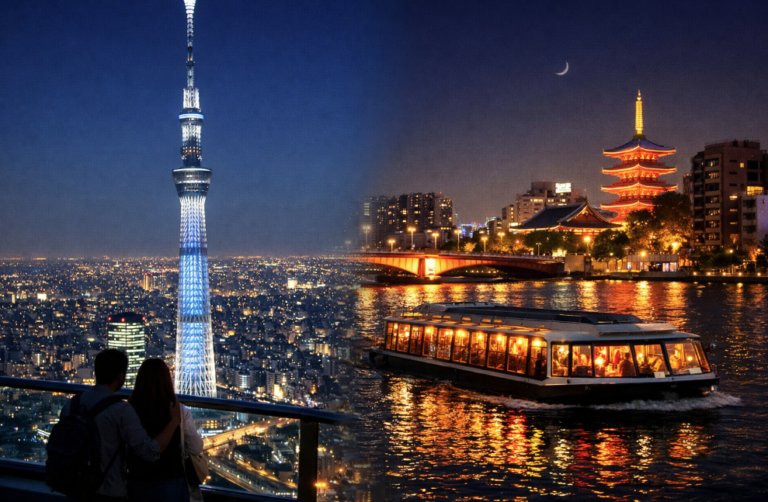
Asakusa is also home to one of Tokyo’s most iconic photo opportunities. To capture the stunning contrast between ancient tradition and modern ambition, take a short walk from the temple toward the Sumida River. From the riverbank, you can frame one of the best photo spots in the area: the historic, crimson-and-gold rooftops of Sensō-ji with the futuristic Tokyo Skytree soaring behind them.

Where Locals Eat: From Hoppy Street Izakayas to Modern Wagyu
When the sun sets, Asakusa’s energy shifts from serene temple grounds to buzzing, lantern-lit alleyways. The best place to experience this is Hoppy Dori, or “Hoppy Street,” a narrow lane famous for its collection of traditional, open-air Japanese pubs known as izakayas. Here, you’ll find locals and tourists spilling out onto tables, sharing stories over drinks and simple, hearty food.
Of course, you can’t visit without trying the street’s namesake. “Hoppy” is a nearly non-alcoholic, beer-flavored drink that you mix yourself with a shot of Japanese liquor called shochu—a nostalgic taste of old Tokyo. It’s the perfect match for the area’s signature dish: nikomi, a rich and savory stew of beef and vegetables that has simmered for hours.
This rustic, communal experience is a world away from a formal restaurant. Yet, just as Asakusa balances old and new, its dining scene caters to all tastes. For a more upscale meal, you can find premium beef at spots like Wagyu Ichinoya Asakusa. The choice between a bubbling stew under a red lantern or a perfectly grilled steak showcases the neighborhood’s dynamic range.

Your Perfect One-Day Itinerary for Asakusa
Asakusa is often the “main event” for first-time visitors because it delivers Tokyo’s most iconic traditional sights in a compact, walkable area. But it also shines even more when you pair it with Ueno in the same day: Ueno gives you a relaxed, culture-heavy morning (parks, museums, market vibes), then Asakusa takes over in the afternoon with Senso-ji, Nakamise-dori snacks, shopping streets, and photo-friendly detours like kimono rental or a rickshaw ride. The transition between the two is straightforward, and the pacing feels balanced—nature and museums first, then temples and street life.
For a clear, timed route that connects Ueno + Asakusa from start to finish (and helps you choose an evening ending like Skytree or a Sumida River option), check out our main guide: Day trip in Ueno and Asakusa: Optional Skytree or Sumida River Evening.
How Asakusa Connects You to the Heart of Tokyo’s History
What was once just a giant red lantern is now a gateway to living history. You know the story that flows from the Kaminarimon gate, through the Nakamise-dōri market, and to the sacred grounds of Sensō-ji Temple. This understanding transforms a simple visit into a meaningful experience.
But the real magic begins where the main path ends. Use this as your starting point, then let curiosity guide you into the quiet backstreets. The best memories are often waiting just beyond the crowds, where you can discover a story of your own.
If you want to learn more about Japanese culture and day trips, as well as an insider’s guide to how to enjoy your trip like a local, be sure to check out Genki Mobile’s Guide for Travelers!