Want to experience Tokyo’s electric energy but feel overwhelmed by the planning? Harajuku’s wild fashion, Shibuya’s world-famous crossing, and Shinjuku’s neon skyscrapers might seem like too much for one day. But they’re surprisingly close, and with a simple strategy, you can conquer all three without the stress.
This one-day itinerary is for travelers who want Tokyo’s top modern classics in one smooth day. It avoids rushing or wasting time going back and forth across the city. These neighborhoods line up along the same corridor, so your day flows naturally. It moves from calm to color to skyline, ending where Tokyo feels most alive at night.
You’ll start with a quiet reset at Meiji Jingu + the Yoyogi forest walk.
Then you’ll step into the playful buzz of Harajuku (Takeshita Street) andOmotesando as the city’s energy builds. From there, you’ll reach Shibuya at a great time for Hachiko, Shibuya Crossing, and Shibuya Sky at sunset. Then you’ll end in Shinjuku. Dinner alleys and nightlife make a great final chapter.
If you prefer to plan in bite-sized pieces, this itinerary is supported by connected deep dives for each stop:
- Meiji Jingu/Yoyogi,
- Harajuku + Omotesando,
- Shibuya (Crossing/Hachiko),
- The short Shibuya Sky guide,
- Shinjuku at night.
Use the full itinerary for timing and direction, then open each deep dive when you’re ready to zoom in.
Essential tips before you start your day
How to commute between Harajuku & Shibuya & Shinjuku

The secret to traveling between these neighborhoods is the bright green JR Yamanote Line, which runs in a convenient loop around central Tokyo. To make your journey smoother, grab a prepaid transit card like a Suica or Pasmo at the station. You just tap it on the gate readers to pay for your ride, skipping the need to buy individual tickets.
Stay online during your Tokyo trip
You’ll lean on Google Maps for station exits, train transfers, and walking routes—so reliable data keeps the itinerary smooth.
If you need internet during your Japan trip, Genki Mobile provides three solutions:
- Pocket Wi‑Fi for tourists: Best for groups or multiple devices (everyone connects to one hotspot).
- eSIM for Japan travel: Best if your phone supports eSIM and you want the lightest setup (no extra device). Quick to activate and ideal for solo travelers.
- Japan Tourist SIM card: Best if you prefer a traditional swap-in option or your phone doesn’t support eSIM.
Genki Mobile’s Japan travel Pocket Wi-Fi and SIM cards can be delivered to Haneda Airport, Narita Airport, or directly to your hotel, so you can get online as soon as you arrive in Japan.
With dependable data, you can navigate big stations, confirm opening hours, and adjust timing on the fly without stress.
Now, let’s start the day.
Stop 1: Find Peace at Meiji Jingu Shrine
Yoyogi Park
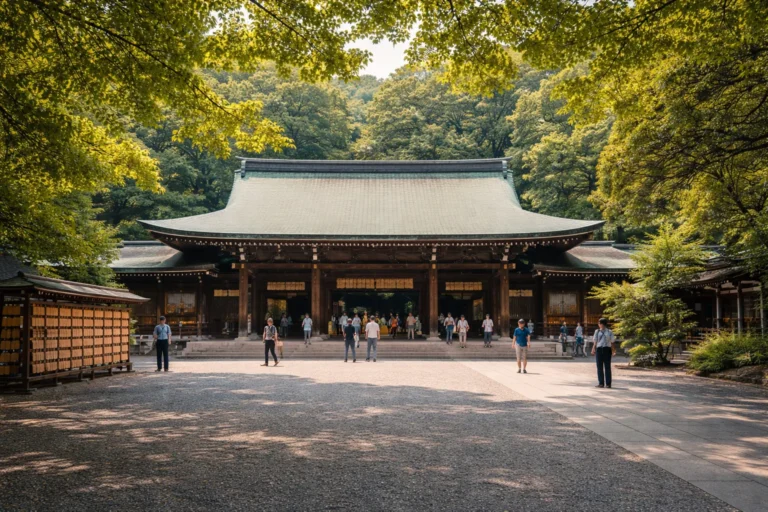
Our day begins in an unexpected forest oasis right next to the bustling Harajuku station. We’re starting at Meiji Jingu, a famous Shinto shrine, because visiting in the morning lets you experience its incredible tranquility before the crowds arrive. Beginning your day here offers a perfect, gentle contrast to the high-energy neighborhoods ahead, making it an ideal first stop for a refreshing morning walk.
Torii gate
You’ll know you’ve found the right place when you see the magnificent wooden gate at the path’s entrance. This is a torii, a traditional structure that signals you are leaving the ordinary world and entering the sacred grounds of a Shinto shrine. In practice, passing through it feels like stepping into another realm entirely, as the city noise gives way to a profound sense of peace. As a simple sign of respect, many visitors offer a small bow as they pass through.
Meiji Jingu Shrine
As you stroll along the wide gravel path through Yoyogi Park, you’ll discover the journey through Meiji Jingu shrine is an attraction in itself. The site is a place of deep respect, dedicated to Emperor Meiji and Empress Shoken, so a quiet tone is appreciated by all who visit. This serene walk, surrounded by towering trees, is the perfect way to recenter before diving into the rest of your Tokyo adventure.

Stop 2:Dive into the Colorful Energy of Harajuku
Takeshita street
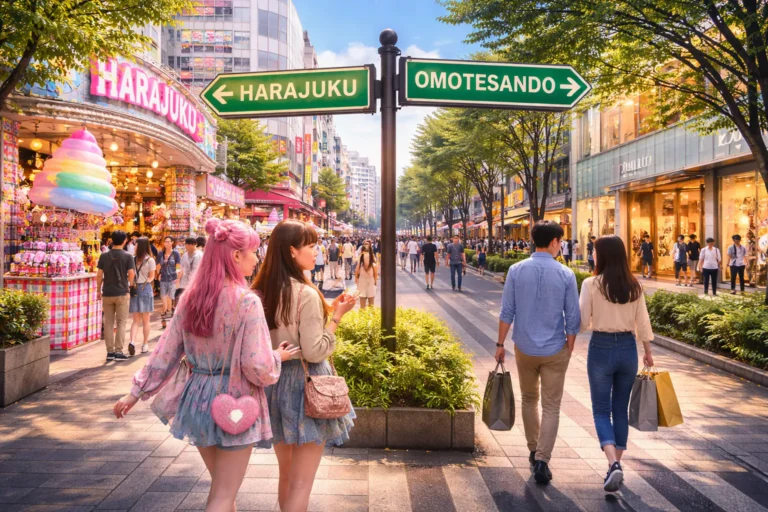
After soaking in the tranquility, it’s time to dive headfirst into the action. Head back across the street from the station to find Takeshita Street, the vibrant heart of Harajuku’s youth culture. This narrow pedestrian lane is an exciting sensory overload of quirky fashion boutiques, shops selling cute character goods, and the irresistible smell of Harajuku’s most iconic snack: the dessert crepe.
You can’t leave without trying one. These are thin pancakes rolled into a cone and filled with an amazing variety of ingredients like whipped cream, fresh fruit, and even entire slices of cheesecake. Don’t be intimidated by the menus; every shop displays plastic models of their creations, so you can simply point to order. Just be sure to find a spot to stand and eat, as walking while eating is a local no-no. Once you’re fueled up, we’re ready for our next stop, which is actually close enough to walk to.
Omotesando
When you’re ready for a change of pace, make your way to the area’s main avenue, Omotesando. The contrast is immediate. If Takeshita Street is a packed concert, Omotesando is a chic gallery opening. Think of it as Tokyo’s version of Fifth Avenue or Rodeo Drive—a wide, tree-lined boulevard flanked by stunning architecture and high-end designer flagships like Chanel and Dior.
Conveniently, this elegant boulevard isn’t just for window shopping; it’s also your scenic walking route to our next destination. A pleasant 15-minute stroll down Omotesando will lead you directly toward the district of Shibuya. As you walk, you’ll feel the city’s energy shift again, preparing you for the dazzling neon and iconic views that await.
If your feet are already tired, just head back to Harajuku Station and hop on the green JR Yamanote Line heading south. It’s only one stop away, and in less than two minutes, you’ll arrive at Shibuya Station.

Stop 3:Experience Shibuya Crossing and Find Hachiko
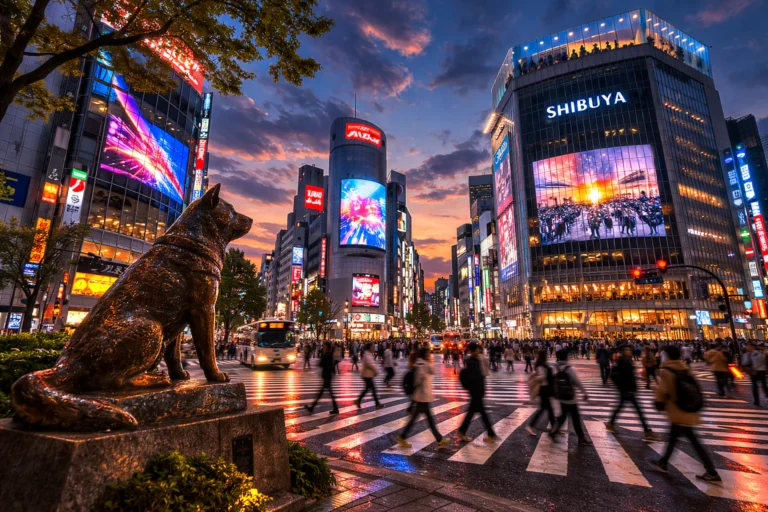
Hachiko Statue
If you commute by train, follow the signs for the “Hachiko Exit. when you arrive” The moment you step outside, you’ll be greeted by the iconic controlled chaos of Shibuya.
Right in front of you is the first must-see landmark: a small bronze statue of a dog. This is Hachiko, beloved across Japan for his incredible loyalty, having waited in this exact spot for his owner every day for years, long after his owner had passed away. It’s the most famous meeting point in Tokyo, so expect a small crowd, but it’s the perfect spot for a quick photo.
If you walked to Shibuya, once you reach the Shibuya Scramble Crossing , aim for the side with Shibuya Station’s main building and the big “Shibuya” signage. The Hachiko Statue is right outside Shibuya Station at the Hachiko Exit—look for the small bronze dog with a constant photo line, just a minute or two from the crossing.
Shibuya Scramble Crossing
From Hachiko’s statue, look across the street to the massive intersection. This is the world-famous Shibuya Crossing, or “the scramble.” For the best free view, head into the Tsutaya building opposite the station and go up to the 2nd-floor Starbucks. From its massive window, you can watch in awe as hundreds, sometimes thousands, of people cross the intersection from all directions at once.
After you’ve watched a few cycles of the traffic lights, it’s time to join in. Waiting on the curb for the pedestrian light to turn green builds a unique anticipation. Then, walk with the wave of people into the middle of the street. It’s a surprisingly organized and exhilarating experience that makes you feel like you’re truly in the heart of Tokyo. Once you’ve had your fill, get ready to head for the sky as evening approaches.

Stop 4: See Tokyo from Above at Shibuya Sky
Next we’re heading to Shibuya Sky, an open-air observation deck on top of a skyscraper. Here’s the most important tip: you must book your tickets online, weeks in advance, especially if you want a specific time. Sunset slots are the first to sell out, and they offer an experience you won’t want to miss.
Visiting just before sunset is the secret to getting three views for the price of one. You’ll arrive while it’s still light out, giving you a clear view across the vast city—you might even spot Mt. Fuji on the horizon. Then, you can watch as the sun dips below the skyline, painting the sky in incredible colors. Finally, as darkness falls, you’ll witness the moment Tokyo’s millions of lights begin to glitter and sparkle to life beneath you.
From this incredible vantage point, you’ll also get a bird’s-eye view of the world-famous Shibuya Crossing. It looks like a mesmerizing dance as hundreds of people stream across the intersection from all directions at once. After you’ve soaked in the views from above, head down to experience that famous “scramble” for yourself before making your way to our final destination.

Final Stop:Find the Perfect Dinner Spot in Shinjuku’s Glowing Alleys
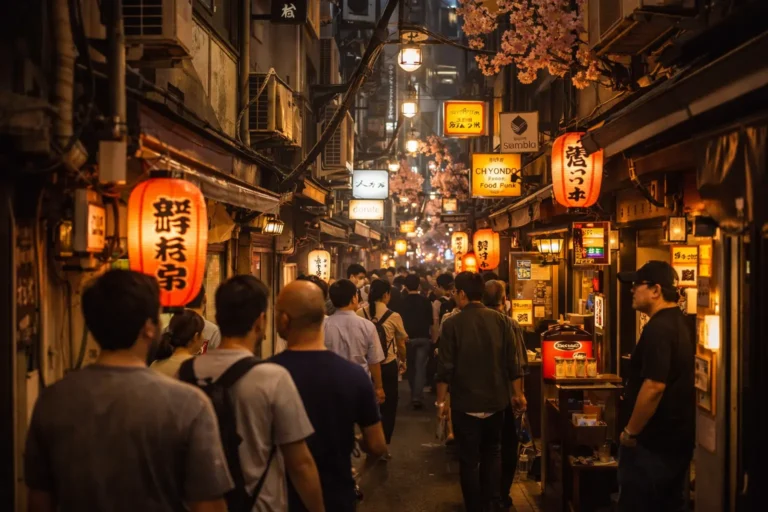
For our final stop, a short train ride brings us to Shinjuku, the buzzing heart of Tokyo’s nightlife. But instead of the giant neon signs and modern department stores, we’re diving into a different world. Tucked away near the train tracks are several networks of tiny, lantern-lit alleys that feel like a step back in time. This is where you’ll find some of the city’s most atmospheric and delicious dinner spots, with smoke and savory smells spilling out of doorways.
You’ll likely hear about two famous areas: Omoide Yokocho and Golden Gai. Here’s the simple difference: Omoide Yokocho is primarily for food, while Golden Gai is a maze of tiny, unique bars.
The perfect alley for dinner
For dinner, we’re heading to Omoide Yokocho. Here, you’ll find dozens of miniature restaurants serving up classic Japanese comfort food. The must-try dish is yakitori, which are delicious grilled chicken skewers. They’re cooked right in front of you, and you can order a few different kinds to find your favorite.
Be prepared for a cozy experience—and that’s a huge part of the fun. These places are small, often seating fewer than ten people on stools along a single counter. It’s crowded, a little smokey, and wonderfully lively. You’ll be sitting shoulder-to-shoulder with locals finishing their workday and fellow travelers discovering this hidden gem. Grabbing a seat, ordering some skewers, and soaking in the bustling energy is the perfect, authentic way to end your epic day exploring Tokyo.
Optional Evening Alternative: Shin-Okubo (Tokyo’s Koreatown)
If your hotel is in Shinjuku , you can swap the Shinjuku nightlife streets for an easy evening in Shin-Okubo , Tokyo’s Koreatown just one stop away on the JR Yamanote Line (or a manageable walk from the east side of Shinjuku). The vibe is lively and food-focused: you’ll find Korean BBQ, fried chicken, tteokbokki, and cheese-heavy street snacks, plus dessert cafés for bingsu or trendy drinks. Between bites, browse K‑beauty shops, small markets, and pop-culture stores—this is a great area for skincare restocks and fun souvenirs. It’s well-lit, busy, and simple to do without reservations, making it a practical “Shinjuku-adjacent” night that still feels like a distinct Tokyo neighborhood. When you’re done, it’s an easy ride back to Shinjuku for your last train or a relaxed walk home.

Your Perfect One-Day Tokyo Itinerary Recap
This one-day journey offers a perfect taste of Tokyo’s incredible contrasts. The day unfolds with the morning peace of Meiji Shrine, moves through Harajuku’s vibrant street fashion, and peaks with a perfectly timed sunset view over Shibuya. From there, the adventure continues with the experience of the world’s most famous intersection up close, before diving into the dazzling, neon-lit alleys of Shinjuku.
Following this path provides a key to understanding Tokyo’s unique harmony—the seamless blend of sacred tranquility and futuristic energy. This whirlwind day, moving from a peaceful shrine to a neon-soaked city, showcases the unforgettable experiences that make Tokyo one of the world’s most exciting destinations.
If you loved the energy of Harajuku, Shibuya, and Shinjuku , your next “classic Tokyo” day can lean more historic and scenic: Ueno + Asakusa , with an evening choice between Tokyo Skytree views or a relaxed Sumida River walk (or cruise). It’s an easy companion itinerary that shows a completely different side of the city—temples, old-town streets, and riverside views—without feeling repetitive. Continue with A Perfect Day Trip in Ueno & Asakusa: Evening at Skytree or on the Sumida River for the full route, then dive deeper into each stop with the dedicated guides.
Frequently Asked Questions
Question: What’s the simplest way to see Harajuku, Shibuya, and Shinjuku in one day without stress?
Short answer: Follow a day-to-night flow on the JR Yamanote Line: start calm at Meiji Jingu in Harajuku, shift to Harajuku’s Takeshita Street and Omotesando by late morning, move to Shibuya for Hachiko and the Scramble in the afternoon, then time Shibuya Sky for sunset (book ahead), and finish with dinner in Shinjuku’s cozy alleys. This order catches each neighborhood at its most vibrant while keeping travel easy and minimal.
Question: How do I get between the neighborhoods, and do I need a transit card?
Short answer: Use the bright green JR Yamanote Line, which loops through all three—Harajuku → Shibuya is just one stop (about two minutes), and Shibuya → Shinjuku is similarly quick. Get a Suica or Pasmo prepaid card at the station to tap in/out without buying individual tickets. You can also walk from Harajuku to Shibuya via Omotesando in about 15 minutes for a scenic, straightforward route.
Question: Do I need to book Shibuya Sky, and when’s the best time to go?
Short answer: Yes—book online in advance, especially for sunset, which sells out first. Arrive just before sunset to enjoy three views in one visit: daytime cityscapes (often with Mt. Fuji visible on clear days), a colorful sunset, and the sparkling night skyline. From the deck you’ll see the Scramble below—then head down to cross it yourself.
Question: Where are Hachiko and the best free view of Shibuya Crossing?
Short answer: Hachiko is right outside Shibuya Station at the Hachiko Exit; expect a small line for photos with the bronze dog statue. For a free overhead view of the Scramble, go to the 2nd-floor Starbucks inside the Tsutaya building opposite the station. After watching a few light cycles, join the crossing—it’s crowded but remarkably orderly.
Question: Any quick etiquette or dining tips for this route (Meiji Jingu, Harajuku, and Shinjuku)?
Short answer: At Meiji Jingu, bow lightly at the torii gate and keep voices low as you walk the gravel paths. In Harajuku, try a crepe on Takeshita Street:
- Point at the plastic display to order
- Stand still to eat
- Don’t walk while eating
In Shinjuku, Omoide Yokocho is for food (try yakitori at tiny counter spots), while Golden Gai is mainly for intimate bars. Prefer an easy, food-focused alternative nearby? Shin-Okubo (Koreatown) is one Yamanote stop from Shinjuku, with lively streets, Korean BBQ and snacks, dessert cafés, and K‑beauty shops—no reservations needed.