What if you could experience ancient history, priceless art, beautiful nature, and a bustling street market, all in a single afternoon in Tokyo? You can. Welcome to Ueno, the cultural heart of Japan’s massive capital, where every corner offers a different piece of the country’s soul.
This sprawling district is built around Ueno Park, a green oasis that holds the nation’s most important museums, a famous zoo, and quiet temples. Just steps away, the vibe shifts completely at Ameya Yokocho, an energetic open-air market street buzzing with sizzling food stalls and bargain shops. It’s a place of incredible contrasts.
Ueno’s unique blend of experiences proves that you can find the city’s past and present all in one vibrant, unforgettable place.
Why Ueno Is More Than Just a Train Station
While millions of people rush through the massive Ueno Station every month, the real magic lies just outside its exits. Think of it less as a transport hub and more as a gateway. Stepping out of the station is like walking into Tokyo’s cultural living room, where history, art, and nature all converge in one accessible, vibrant space.
The sprawling Ueno Park at its heart wasn’t always open to everyone. Originally the private grounds of a vast and powerful temple, it was transformed in the late 1800s into one of Japan’s very first public parks—a green space designed for the people. This historic decision cemented Ueno’s role as a place for public enrichment, relaxation, and discovery.
This welcoming spirit gives the entire district a unique feel. Ueno is a core part of Tokyo’s Shitamachi (pronounced shee-tah-mah-chee), which simply means “old downtown.” Unlike the futuristic gleam of Shinjuku or Shibuya, this area offers a more grounded and nostalgic glimpse into the city’s living history, making it a perfect spot for any tourist looking to explore a different side of Tokyo.
Stay connected in Ueno (a quick tip before you start exploring)
Ueno is one of those Tokyo areas where a reliable connection quietly makes the day smoother—especially if you’re bouncing between Ueno Park, museum entrances, and the different exits of Ueno Station. Having data on hand helps with live navigation, quick translations, checking opening hours, and finding the nearest café when you need a break.
If you haven’t sorted connectivity yet, Genki Mobile is a simple option with three common setups:
- Pocket Wi‑Fi: Best for groups or multiple devices (everyone connects to one hotspot). Great if you’re hopping between maps, translation, and uploads all day.
- eSIM: Best if your phone supports eSIM and you want the lightest setup (no extra device). Quick to activate and ideal for solo travelers.
- Physical SIM card: Best if you prefer a traditional swap-in option or your phone doesn’t support eSIM.
With that handled, you can focus on the cultural side of Ueno—art, history, and green space—without the small friction of getting lost or going offline mid-day.
A Nature Escape in the City: Finding Pathways, Petals, and Peace in Ueno Park
Ueno Park offers more than just green lawns and quiet pathways; it’s a living ecosystem right in the heart of the city.
Ueno zoo
Tucked within its northern end is Japan’s oldest and most famous zoological garden, Ueno Zoo. For anyone wondering where to see loved animals in Tokyo, this is the definitive answer. The zoo has been a beloved destination for generations, making it one of the most popular family-friendly activities in Taito Ward.This zoo is home to hundreds of species, from polar bears to Sumatran tigers, offering a full day of animal discovery.
Shinobazu Pond
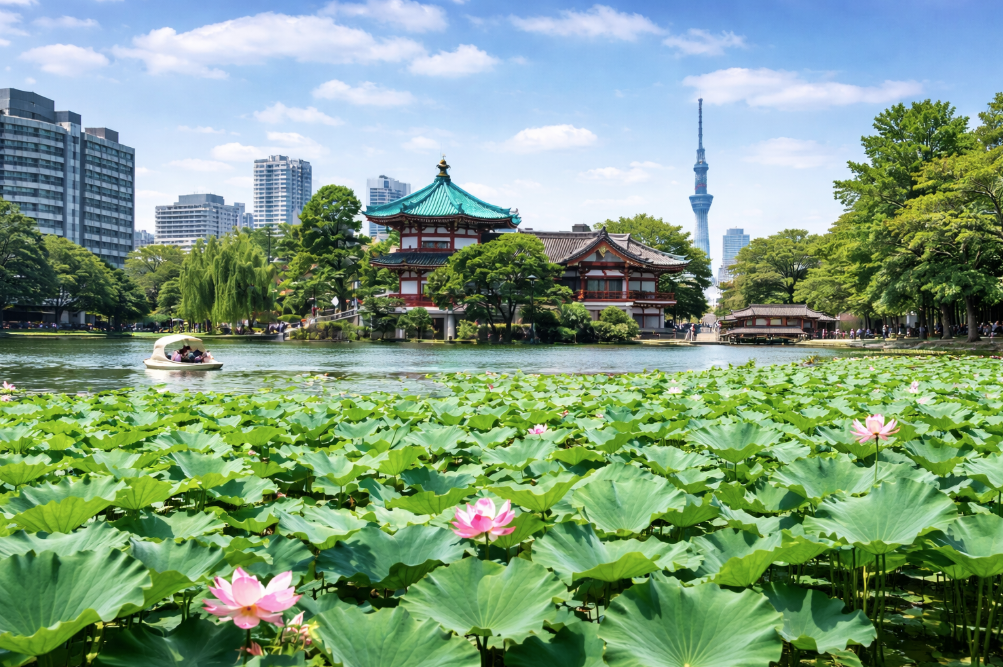
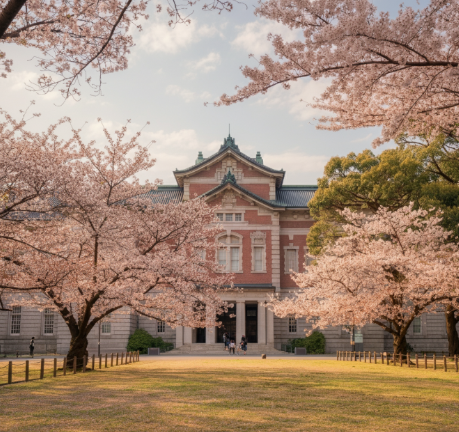
Beyond the zoo, the park’s southern section opens up to the magnificent Shinobazu Pond. This vast, lotus-covered body of water is stunning year-round, but it becomes truly magical during cherry blossom season. For the best time to see the iconic flowers, aim for late March or early April, when the paths circling the pond are transformed into a breathtaking tunnel of pink and white petals.
Swan Boat
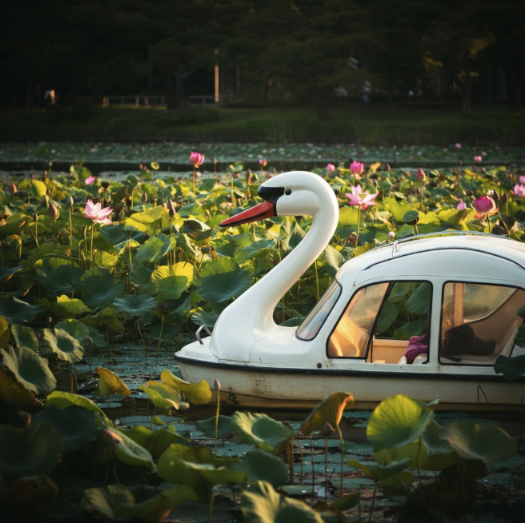
To see it all from a different angle, you can rent a whimsical swan-shaped paddle boat and glide across the water’s surface, with the city skyline in the distance. This peaceful break offers fantastic photo opportunities. But the park’s treasures extend beyond nature. Just a short walk from the pond, you’ll find a trio of Japan’s most important cultural institutions.
Your Guide to Ueno’s World-Class Museum Triangle
What is the Ueno Museum Triangle
Think of Ueno Park as Tokyo’s version of a grand museum quarter. Nestled among the trees are three of Japan’s most prestigious institutions, forming a cultural triangle that holds the nation’s treasures. Each one offers a completely different world to explore, so you can easily find one that sparks your curiosity.
- The largest and most imposing is the Tokyo National Museum, which is like Japan’s version of the British Museum. This is your destination for classic Japanese art and history; its collection of samurai armor, delicate scrolls, and ancient pottery is the best in the country.
- A short walk away, you can’t miss the National Museum of Nature and Science—just look for the life-sized blue whale statue out front. Inside, you’ll find everything from dinosaur skeletons to fascinating exhibits on the evolution of technology.
- Finally, for a taste of Europe, the National Museum of Western Art houses an incredible collection of masterpieces by artists like Monet, Van Gogh, and Picasso, all housed in a building designed by the famous architect Le Corbusier.
With so much to see, which museum to visit in Ueno?
Here’s a simple way to decide:
- Go to the Tokyo National Museum for: Samurai armor and ancient Japanese art.
- Go to the National Museum of Nature and Science for: Dinosaurs and a hands-on, family-friendly experience.
- Go to the National Museum of Western Art for: Famous European paintings by Monet and Renoir.
After an afternoon spent soaking in art, science, and history, you’ve likely worked up an appetite. Fortunately, just beyond the park’s southern edge lies an experience that will delight your other senses: one of Tokyo’s most vibrant and exciting street markets.
How to Eat Your Way Through Ameya Yokocho Market
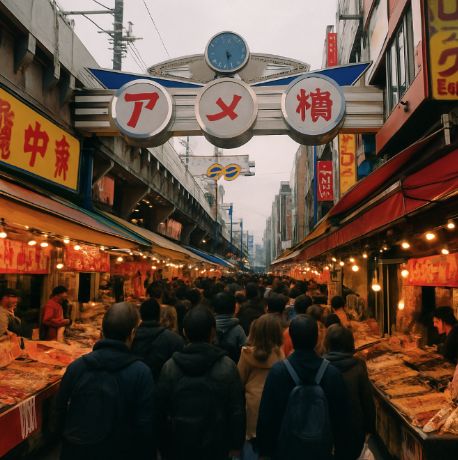
Just a few steps from the quiet park, you’ll find an explosion of sound, smell, and energy. Welcome to Ameya Yokocho, a bustling market street often shortened to “Ameyoko.” Its story begins after World War II as a black market for American goods and candy, and that chaotic, vibrant spirit lives on today. The narrow alley, running under the train tracks, is the lively heart of Ueno’s old-downtown Shitamachi culture, offering a stark and exciting contrast to the calm of the museum district.
The air here is thick with the smell of sizzling food, making it the perfect place for an affordable and authentic snack. This is your chance to try classic Japanese street food like takoyaki—savory, doughy balls filled with a small piece of octopus, grilled to perfection right before your eyes. You’ll also find vendors selling everything from freshly cut fruit on skewers to seasoned dried squid and bags of exotic spices, providing a true taste of local life.
As you navigate the crowds, you’ll notice the market has two personalities. One side is a shopper’s paradise for bargain sneakers, cosmetics, and souvenirs. Deeper in, the market transforms, revealing stalls piled high with fresh fish, produce, and traditional ingredients—this is where local chefs and families do their shopping. An Ameya Yokocho shopping guide is simple: dive in, keep your eyes open, and follow your senses. It’s the perfect, energetic end to an afternoon in Ueno.
A perfect Tokyo day with Ueno
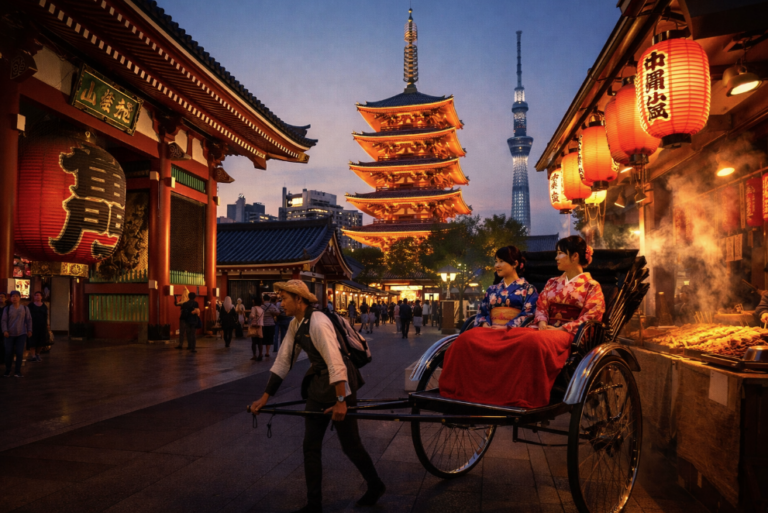
If you’re planning a full Tokyo day, Ueno is one of the easiest areas to “start strong” without burning out. You can spend the morning in Ueno Park (choose a museum or two, stroll Shinobazu Pond, and enjoy the calmer side of the city), then pivot into something more energetic with lunch or snack-hunting around Ameyoko. From there, the day connects naturally to Asakusa: it’s a simple ride on the Ginza Line, and suddenly you’re in temple streets, souvenir lanes, and classic old-Tokyo scenery.
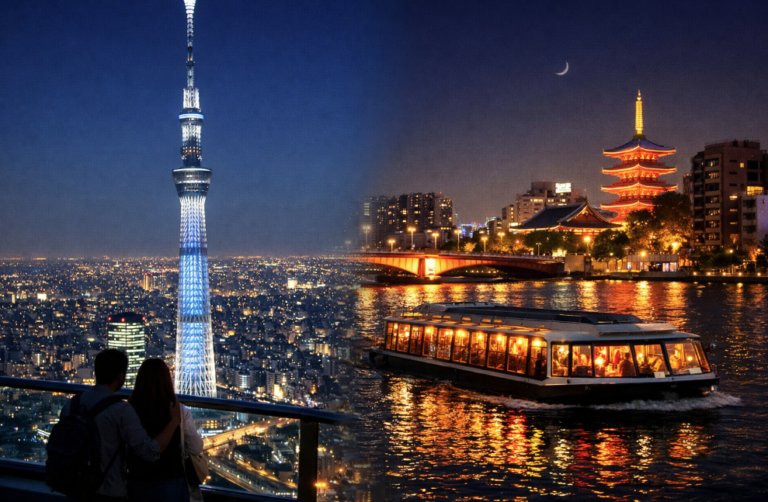
If you want the exact step-by-step order, transit tips, and a smooth plan that combines both neighborhoods—plus an optional evening at Skytree or on the Sumida River—follow the itinerary: Day trip in Ueno and Asakusa: with Skytree or Sumida River Evening.
Making Ueno Your Base: Is This a Good Area for Tourists?
To answer the question: yes, Ueno is an excellent area for tourists to stay. It’s a place where convenience and culture are not a compromise, making it a strategic launchpad for your entire Tokyo adventure.
Your planning becomes simpler knowing that the direct Keisei Skyliner to Narita Airport starts right here, making your arrival and departure effortless. With convenient lodging options like the Centurion Hotel Ueno just steps away, you can drop your bags and immediately start exploring, rather than navigating a complex subway map.
Think of Ueno not just as a park to visit for a day, but as the smart, soulful start and end point for your entire Tokyo journey. It’s the perfect home base that keeps you connected to the city’s pulse while offering an authentic and enriching place to call your own.
If you want to learn more about Japan’s culture and day trips, as well as an insider’s guide to how to enjoy your trip like a local, make sure to check out Genki Mobile’s Guide for Travelers!