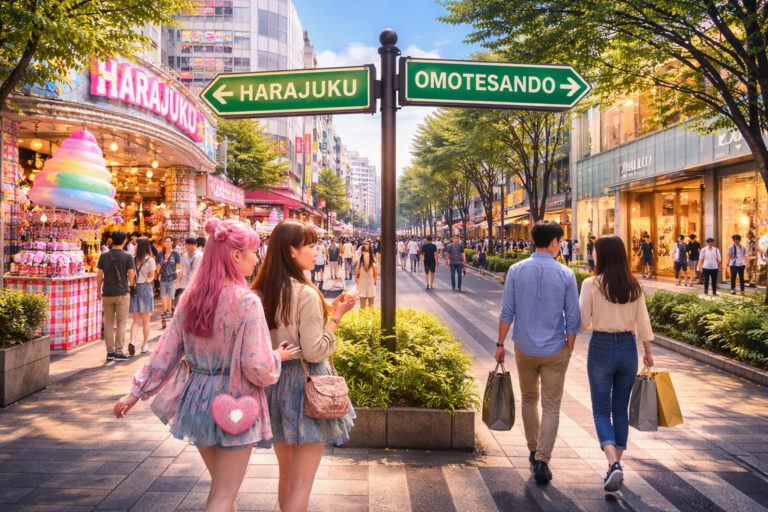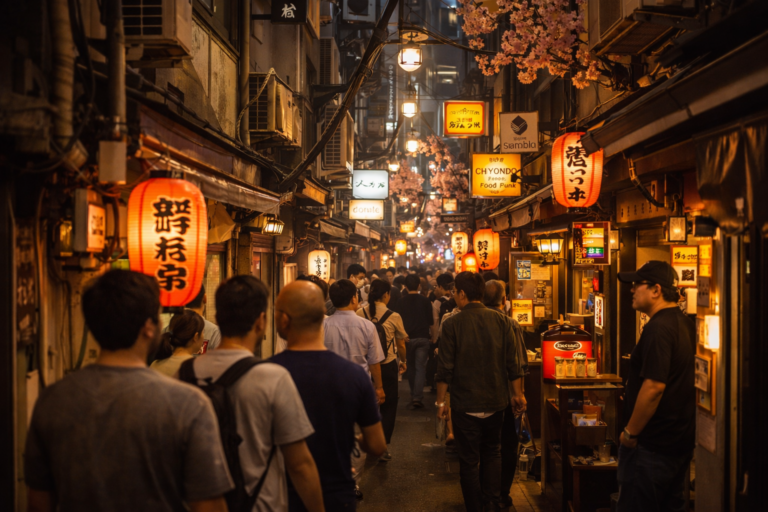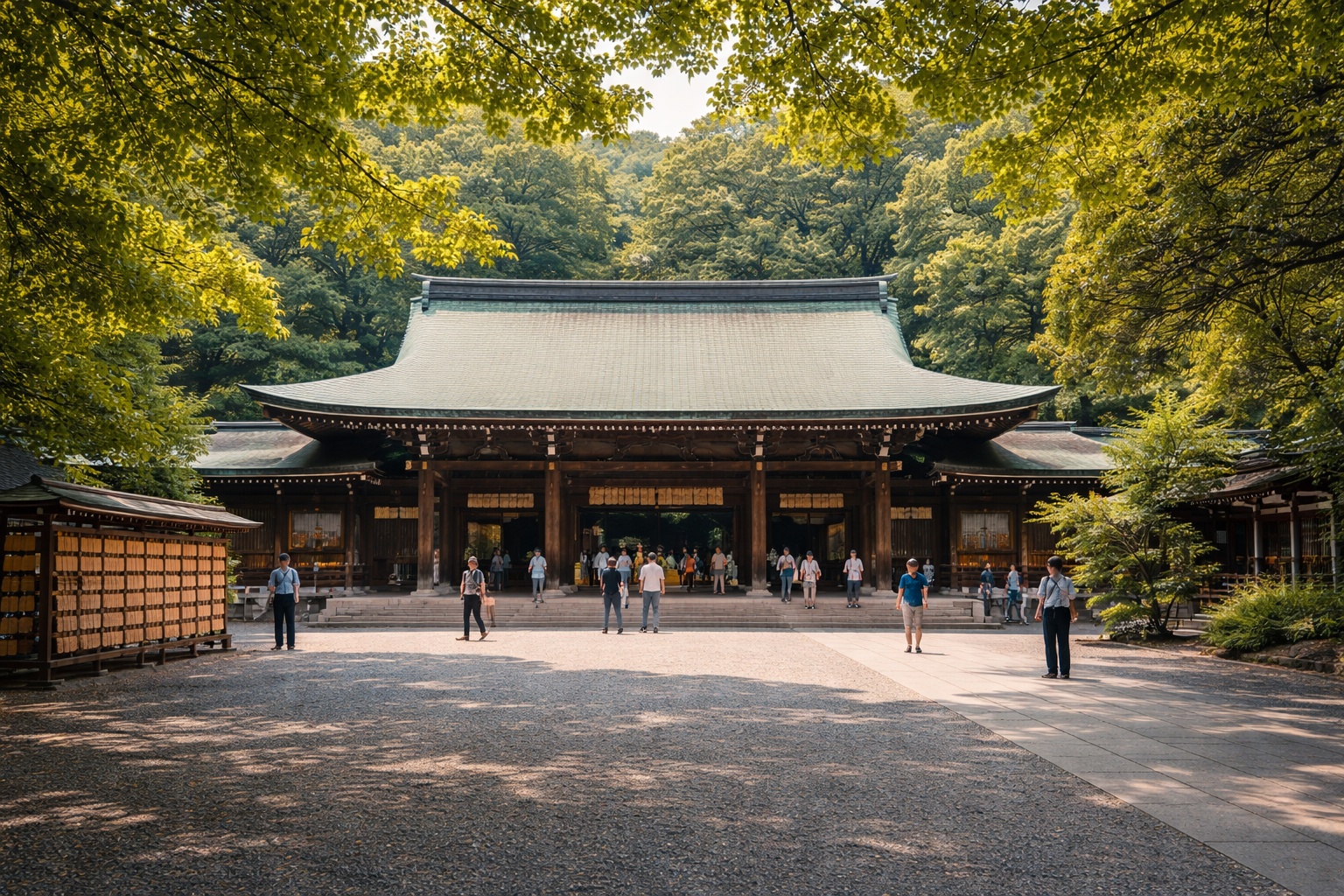
Meiji Jingu and the Yoyogi forest paths are one of Tokyo’s best surprises: you step out near busy Harajuku, walk a few minutes, and suddenly you’re surrounded by towering trees, wide gravel lanes, and a quiet that feels impossible this close to the city’s noise. It’s not a “quick photo stop” kind of place—it’s a slow, grounding start that resets your pace and makes the rest of Tokyo feel more exciting, not overwhelming.
You may be starting here as the first stop in our one-day Tokyo itinerary, before moving on to Harajuku (Takeshita Street), transitioning via Omotesando, and continuing your day with Shibuya (Crossing, Hachiko, and Shibuya Sky at sunset) before ending in Shinjuku at night. If that’s your plan, this guide is your opening move: a calm, straightforward way to begin the day with intention.
This post focuses only on Meiji Jingu + the Yoyogi forest walk—what to see, how long to budget, and the small etiquette details that make the visit feel smooth. When you’re ready to shift from calm to color, jump next to the Harajuku and Omotesando deep dive, or return to the full one-day itinerary hub to keep the entire route flowing.
Stay online during your trip
You’ll lean on Google Maps for station exits, train transfers, and walking routes—so reliable data keeps the itinerary smooth.
Genki Mobile offers three simple ways to stay online in Japan:
- Pocket Wi‑Fi: Best for groups or multiple devices (everyone connects to one hotspot). Great if you’re hopping between maps, translation, and uploads all day.
- eSIM: Best if your phone supports eSIM and you want the lightest setup (no extra device). Quick to activate and ideal for solo travelers.
- Physical SIM card: Best if you prefer a traditional swap-in option or your phone doesn’t support eSIM.
With dependable data, you can navigate big stations, confirm opening hours, and adjust timing on the fly without stress.
Why Yoyogi’s ‘Ancient’ Forest Is Actually Younger Than You Think
As you walk beneath the towering canopy, it’s easy to feel like you’ve stumbled into a forest that has stood for centuries. The truth, however, is one of Tokyo’s most inspiring secrets: this entire forest is man-made. Following the passing of Emperor Meiji and Empress Shoken, this area was transformed around the 1920s from open fields into a living memorial. The forest isn’t ancient, but the dedication behind its creation is profound.
The story of how it came to be is a powerful one. Over 100,000 trees were donated by people from every corner of Japan and planted by thousands of young volunteers. This makes your Yoyogi Forest walk more than just a stroll; you’re moving through a symbol of nationwide respect and unity. Each tree represents a personal contribution from the Japanese people to honor the leaders who guided them into the modern age.
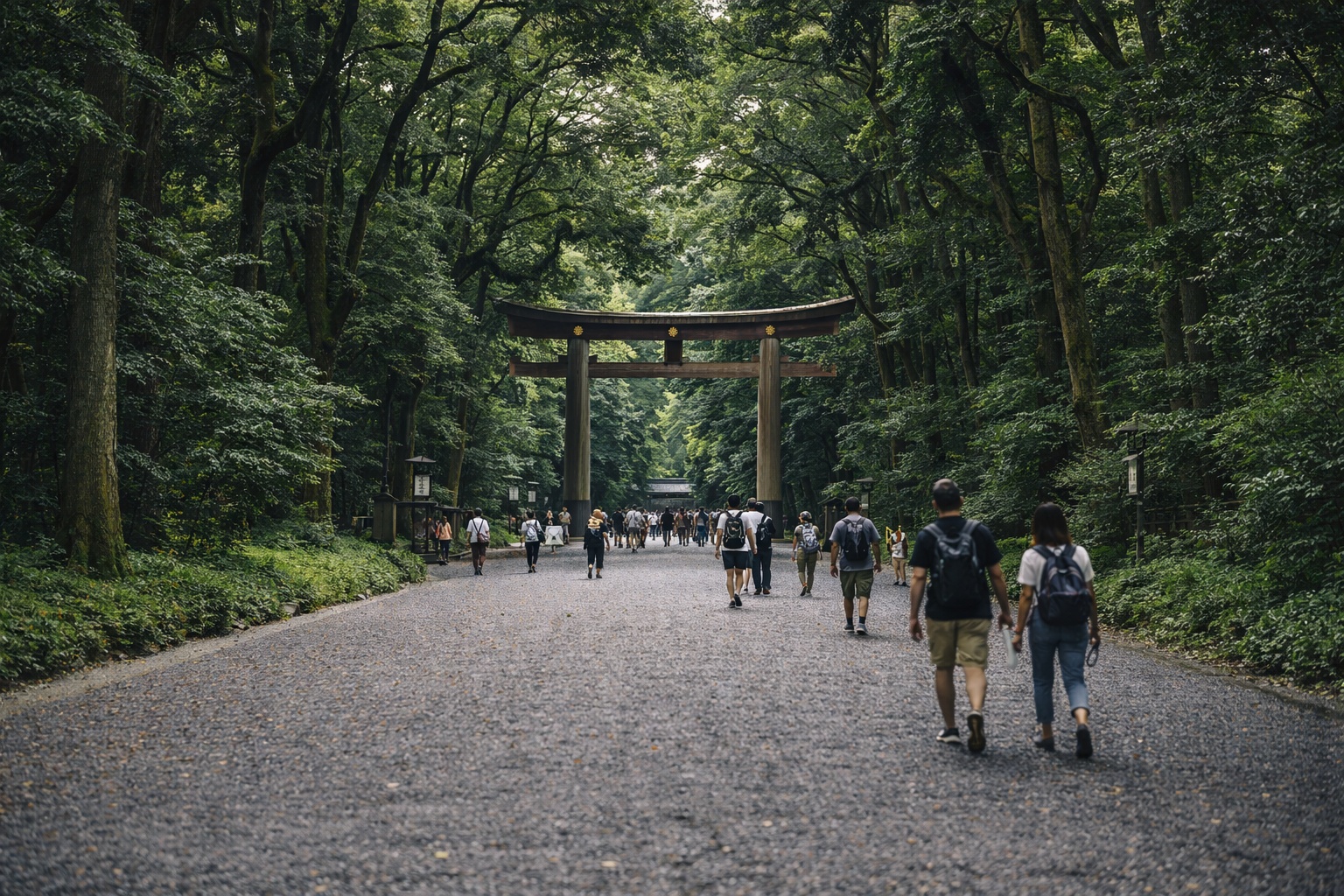
Even the path you’re on is part of the design. The wide, gravel-covered walkway isn’t just for getting from A to B; it intentionally slows your pace. Listen to the gentle crunch under your feet—it’s a sound that naturally quiets your mind and separates you from the city’s rush. This slow, respectful approach is the perfect mindset for arriving at the main shrine complex.
How to Show Respect: A Simple Guide to Shrine Etiquette
As the forest path opens up, you’ll come face-to-face with a massive wooden gate. This is a torii, an iconic symbol marking the boundary between the ordinary world and the sacred grounds of the shrine. The custom here is simple but meaningful: before passing through, pause and perform a shallow bow. It’s a small gesture of respect for the space you are about to enter.
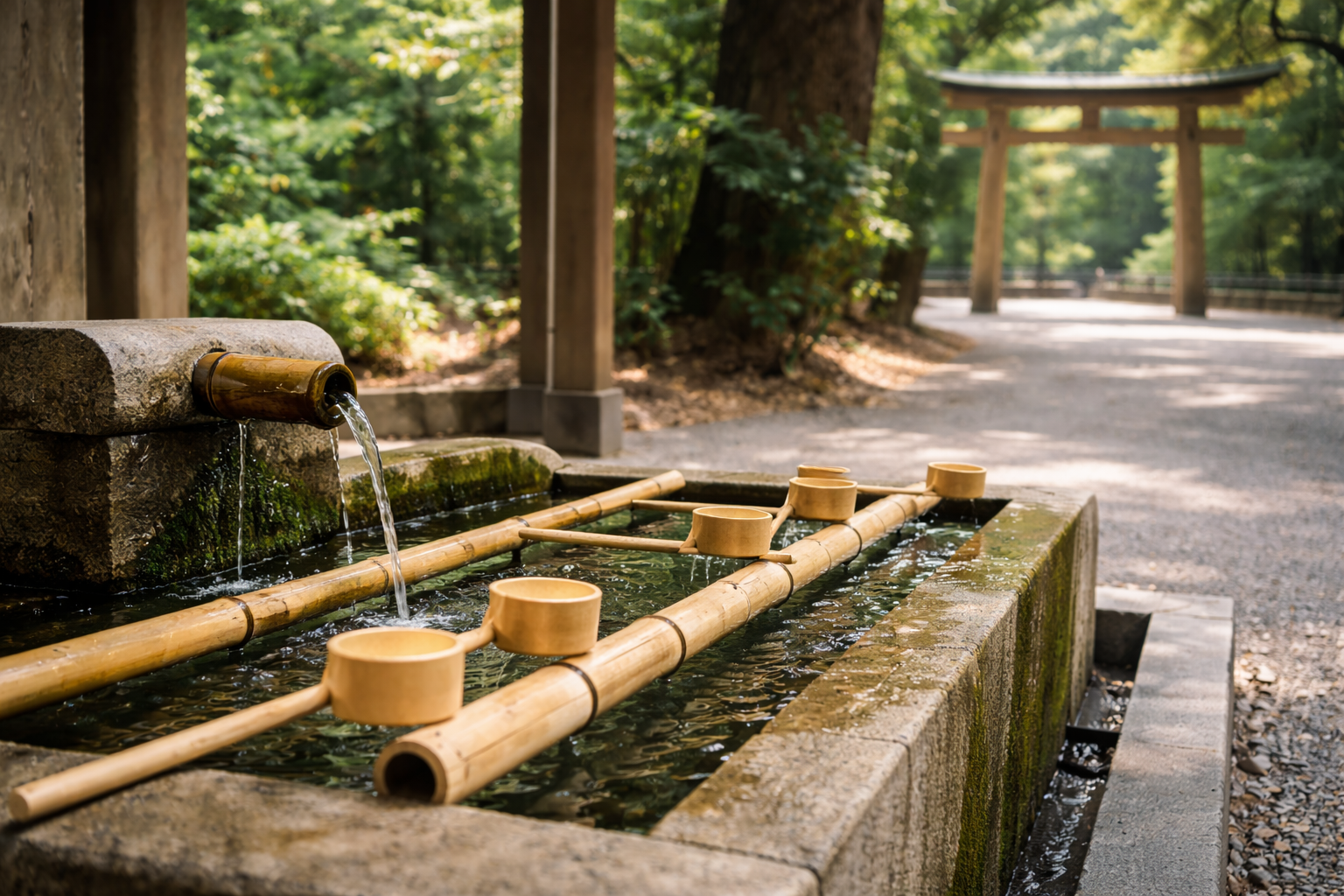
Just beyond the gate, you will likely see a covered pavilion with running water. This is the temizuya, a purification fountain for cleansing your hands and mouth before approaching the deities. Don’t feel intimidated; participating is easy and shows great respect.
- Pick up one of the long-handled ladles in your right hand and fill it with fresh water.
- Gently pour some water over your left hand to rinse it.
- Switch the ladle to your left hand and rinse your right hand.
- Pour a little water into your cupped left hand and use it to quietly rinse your mouth. Be sure not to drink directly from the ladle or spit back into the basin.
- Finally, tilt the ladle so the remaining water runs down the handle, cleaning it for the next person.
If all this feels like a lot to remember, just focus on the single most important rule of Meiji Shrine etiquette: maintain a quiet voice and a calm, respectful demeanor. Your peaceful presence is the most valuable offering you can make. Now, feeling cleansed and prepared, you’re ready to enter the main courtyard.
What to Do in the Main Shrine Courtyard: Prayers, Wishes, and Fortunes
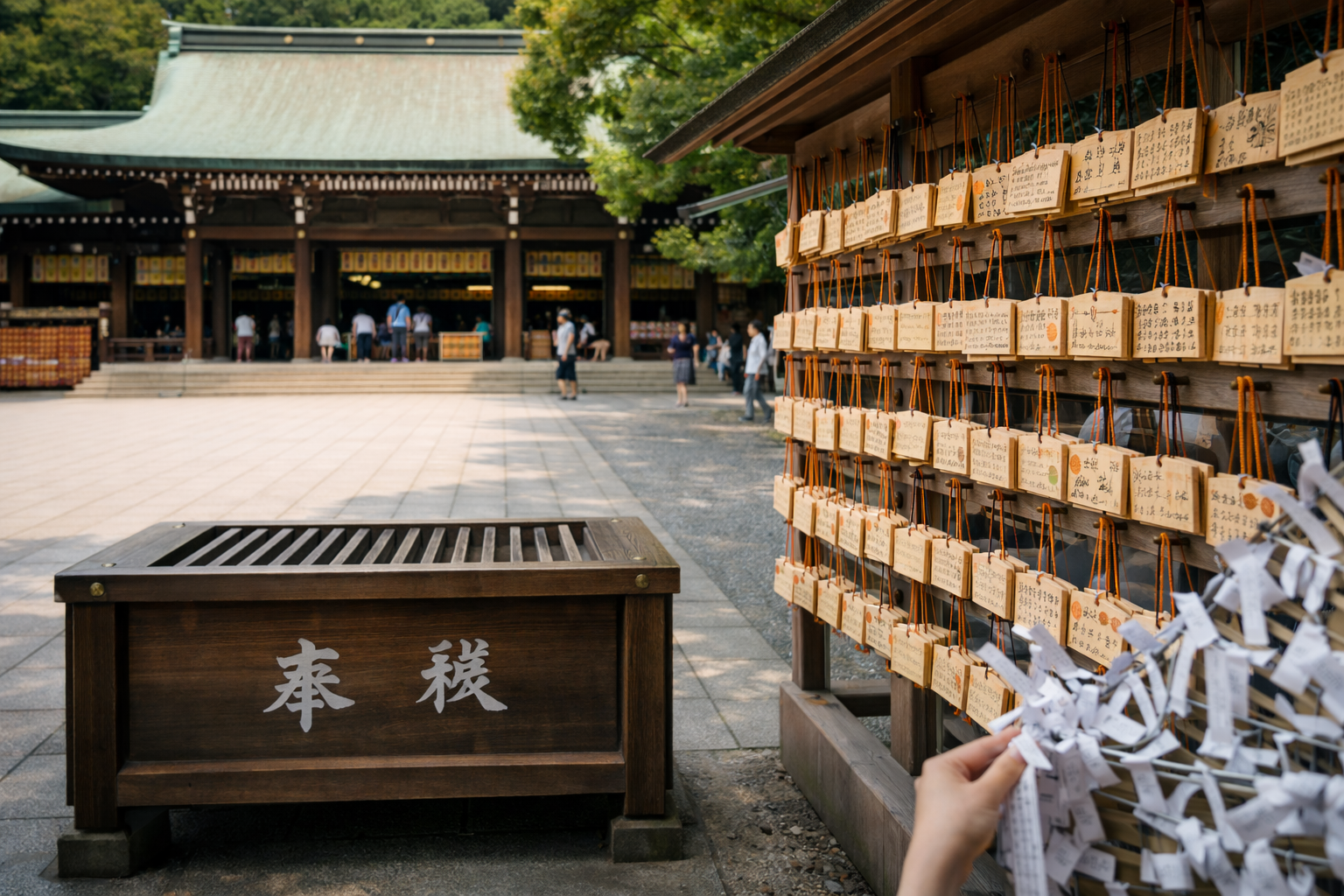
Once you enter the spacious main courtyard, your attention will be drawn to the grand offering hall. If you wish to offer a prayer, the Shinto custom is straightforward and beautiful. Gently toss a coin into the large offering box, bow deeply twice, clap your hands twice in front of your chest, and then hold them together for a silent moment of prayer or gratitude. When you are finished, perform one final deep bow.
Near the main hall, you’ll see large racks covered in thousands of small wooden prayer plaques. These are called ema, and they carry the hopes and dreams of visitors from all over the world. For a small donation, you can get a plaque of your own, write down a personal wish or a message of thanks, and hang it up to be left in the care of the shrine’s deities. Reading the messages in different languages is a moving reminder of our shared humanity.
For a bit of fun, you can also try your luck with an omikuji, or paper fortune. After making a small offering, you’ll receive a slip of paper with a blessing, ranging from “great good fortune” to “bad fortune.” If you happen to draw a less-than-lucky one, don’t worry! The tradition is to tie the paper strip onto a designated wire or tree branch on the shrine grounds, symbolically leaving the bad luck behind.
Keep your eyes open as you explore the courtyard. On weekends, you might be lucky enough to witness a traditional Shinto wedding procession, with priests leading a bride in a stunning white kimono and a groom in formal black robes. It’s a serene and beautiful sight, perfectly capturing the living, breathing spirit of the shrine.
Who Were Emperor Meiji and Empress Shoken?
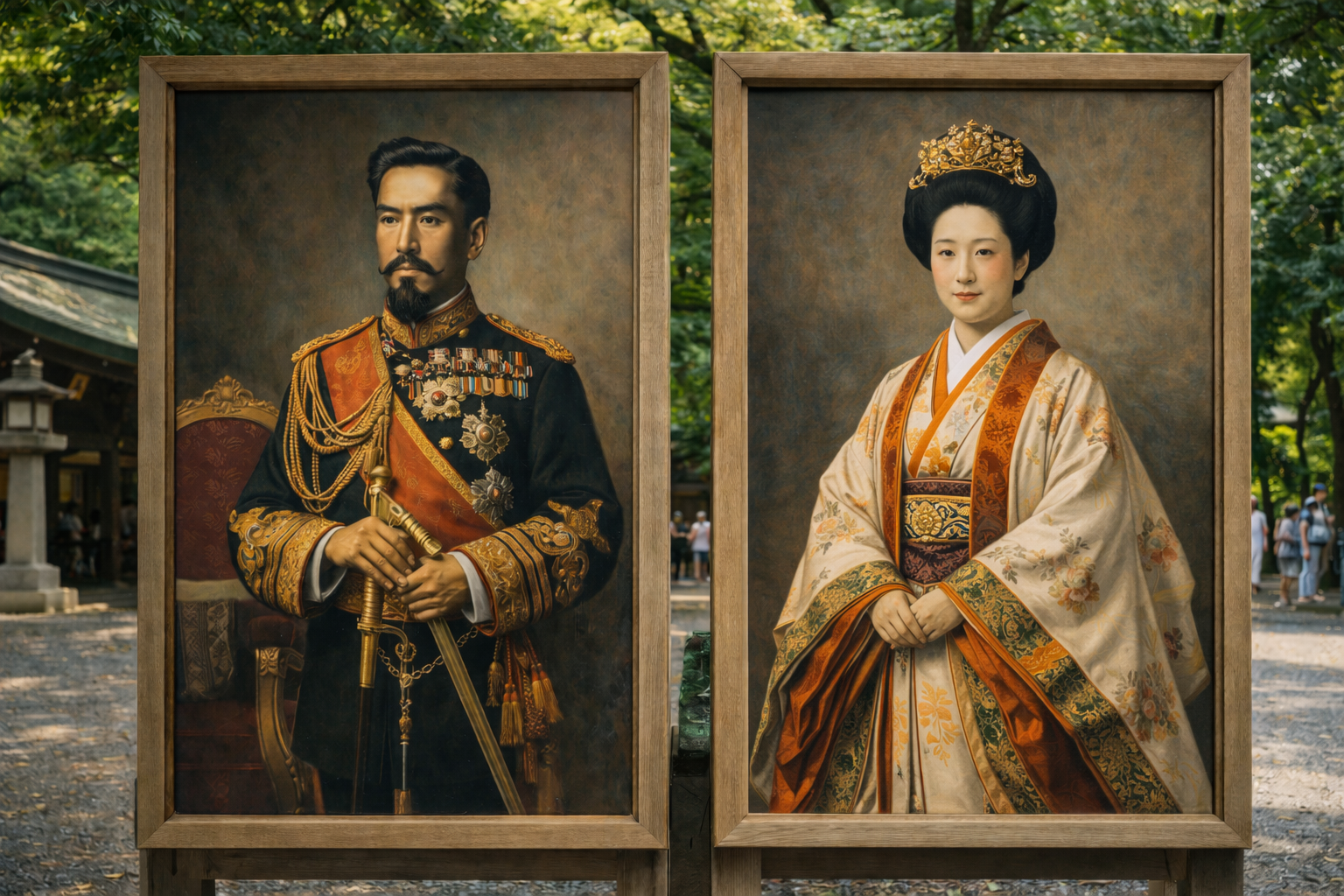
Emperor Meiji
So, who were the important figures this tranquil space honors? The shrine is dedicated to Emperor Meiji, a pivotal leader who reigned during the late 19th century.
He guided Japan through its rapid transformation from an isolated, feudal society into a modern nation open to the world. After his death, the people of Japan wanted a special place to show their ongoing respect, and so they built this beautiful shrine and forest as a lasting tribute to his legacy.
Empress Shoken
Alongside him, the shrine venerates Empress Shoken, a forward-thinking and compassionate figure in her own right.
She was a passionate advocate for women’s education and played a crucial role in establishing the Japanese Red Cross Society. Her focus on social welfare and charity left an enduring mark on the country, and her spirit is celebrated here just as much as the Emperor’s role in modernization.
Is Meiji Shrine where the two royals were buried?
It’s a common question, but the emperor and empress are not buried here; their actual tombs are in Kyoto. Meiji Jingu was built to enshrine their spirits, honoring their virtues and influence on the nation. Think of it less as a tomb and more as a living monument—a place of remembrance and gratitude, celebrating the ideals they represented for Japan’s future.
Two Unique Photo Spots Most Visitors Miss
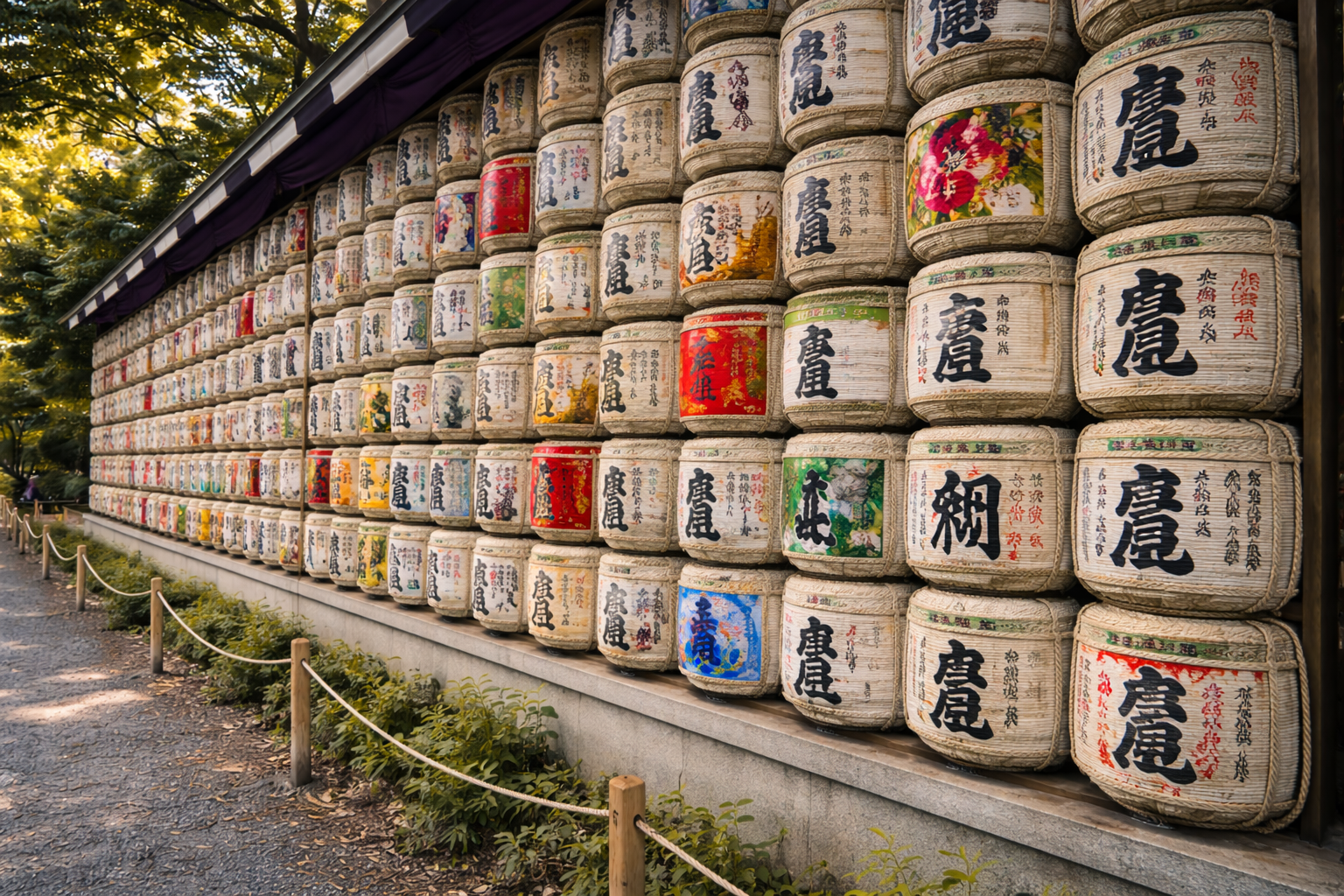
Sake Barrels (Kazaridaru)
As you continue along the wide gravel path, you’ll encounter one of the most striking sights at Meiji Jingu: a massive wall of beautifully decorated barrels. This is the famous sake barrels display (kazaridaru), one of the best photo spots in the shrine. These empty barrels are symbolic offerings from sake brewers across Japan, given to the enshrined spirits as a sign of deep respect and to pray for prosperity. The vibrant, traditional designs make for a fantastic photo that captures a unique aspect of Japanese culture.
Wine Barrels
Directly opposite this display of tradition, you’ll find a surprising contrast: a stack of wine barrels from Burgundy, France. This isn’t a random addition; it’s a powerful symbol of Emperor Meiji’s era. While the sake represents deep-rooted Japanese customs, the wine barrels honor the Emperor’s role in opening Japan to the world and embracing Western culture. The two displays facing each other perfectly capture the blend of tradition and modernization that defined his reign.
Meiji Jingu Inner Garden
For those seeking an even quieter moment of reflection, consider a detour into the Meiji Jingu Inner Garden , or Yoyogi Gyoen . While the main shrine grounds are free, this serene garden requires a small entrance fee (about 500 yen), ensuring it remains a tranquil escape. This was a personal retreat for the Emperor and Empress, and it feels worlds away from the city. If you’re wondering what to see inside the Meiji Shrine Inner Garden, its famous iris garden is absolutely breathtaking when it blooms in early summer.
Meiji Jingu vs. Senso-ji? Yoyogi Park vs. Shinjuku Gyoen?
Meiji Jingu vs. Senso-ji Temple
Many first-time visitors wonder about the Meiji Jingu vs. Senso-ji Temple choice, and the answer comes down to the atmosphere you’re seeking.
- Meiji Jingu is a tranquil Shinto sanctuary wrapped in a quiet forest, designed for peaceful reflection.
- Senso-ji in Asakusa, by contrast, is a vibrant Buddhist temple complex, buzzing with incense smoke, fortune-tellers, and a bustling market street. Meiji Jingu is a quiet retreat; Senso-ji feels like a lively, ongoing festival.
Shinjuku Gyoen or Yoyogi Park
This contrast in feeling extends to the green spaces nearby. When choosing between Shinjuku Gyoen or Yoyogi Park, consider this:
- Yoyogi Park, adjacent to the shrine, is a sprawling, natural-feeling forest that is free to enter, perfect for a simple walk or people-watching.
- Shinjuku Gyoen, however, is a paid, exquisitely designed collection of gardens, showcasing distinct French, English, and Japanese landscapes. Think of it as a botanical art gallery versus a wild forest.
So, how do you choose? If you’re seeking a calm, spiritual walk through nature, the combination of Meiji Jingu and Yoyogi Park is unbeatable. If you want high-energy Tokyo with iconic red lanterns, crowds, and endless sights and snacks, then Senso-ji Temple is your destination.
How Your Meiji Visit Reframes the Chaos of Tokyo
You arrived seeing only a forest path; you leave understanding the journey from city to sanctuary. What were once mysterious rituals are now simple gestures of respect you can confidently perform. This complete Meiji Shrine experience—the quiet walk, the mindful purification, the shared wishes—is now part of your own Tokyo story.
This pocket of peaceful Tokyo doesn’t exist despite the city’s energy; it exists in perfect harmony with it. You’ve just felt Tokyo’s true pulse: the essential balance between vibrant chaos and profound stillness, which makes this city so unique.
As the forest sounds fade and Harajuku’s buzz returns, embrace it. The energy will now feel exciting, not overwhelming. You’ve earned your next adventure, so go find a famous crepe on Takeshita Street—one of the most delightful things to do near Harajuku.
Find more about your next destionation: Harajuku & Omotesando: Tokyo’s Fashion Icons
To see how this serene forest fits into a perfectly planned day, you can always refer back to the master plan:
See the full plan: Tokyo Day Trip: Explore Harajuku, Shibuya & Shinjuku
Q&A
Question: How do I get to Meiji Shrine, and how much time should I plan for the walk?
Short answer: Take the JR Yamanote Line to Harajuku Station—the main entrance to Meiji Shrine is directly across the street. Most visitors find that 90 minutes to two hours is ideal to enjoy the forest walk, observe the customs, and explore the main courtyard without feeling rushed.
Question: Is Yoyogi’s forest actually ancient? What’s the story behind it?
Short answer: It feels ancient, but it’s a carefully planned, man-made forest created around the 1920s as a living memorial to Emperor Meiji and Empress Shoken. More than 100,000 trees were donated from across Japan and planted by thousands of young volunteers—turning open fields into a symbolic, nationwide tribute. Even the wide gravel path is intentional, encouraging a slower, more reflective approach to the shrine.
Question: What basic etiquette should I follow at Meiji Shrine?
Short answer:
- At the torii gate: pause and make a shallow bow before entering.
- At the temizuya (purification fountain): rinse left hand, then right; pour water into your left hand to rinse your mouth (don’t touch the ladle to your lips or spit into the basin); tip the ladle to rinse its handle.
- At the main hall: toss a coin, bow twice, clap twice, pray silently, then bow once more. Above all, keep your voice low and your demeanor calm—quiet respect is the most important custom.
Question: Who were Emperor Meiji and Empress Shoken, and are they buried at Meiji Jingu?
Short answer: Emperor Meiji led Japan’s transformation into a modern nation in the late 19th century, and Empress Shoken championed women’s education and helped establish the Japanese Red Cross. Meiji Jingu enshrines their spirits in honor of their virtues and legacy, but their actual tombs are in Kyoto—think of the shrine as a living monument rather than a burial site.
Question: Should I visit Meiji Jingu or Senso-ji—and Yoyogi Park or Shinjuku Gyoen?
Short answer:
- Meiji Jingu vs. Senso-ji: Choose Meiji Jingu for a tranquil Shinto sanctuary wrapped in forest; pick Senso-ji for a lively Buddhist temple atmosphere with incense, fortune-tellers, and bustling market streets.
- Yoyogi Park vs. Shinjuku Gyoen: Yoyogi Park is free, expansive, and natural-feeling; Shinjuku Gyoen is paid and meticulously landscaped with French, English, and Japanese gardens. Tip: If you opt for Meiji Jingu, don’t miss the iconic sake barrels and the contrasting Burgundy wine barrels, and consider the serene Inner Garden (about 500 yen), especially for its iris blooms in early summer.