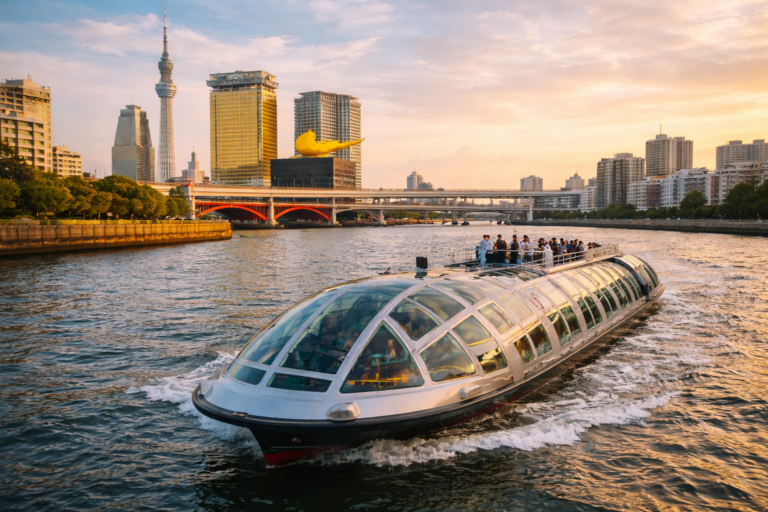
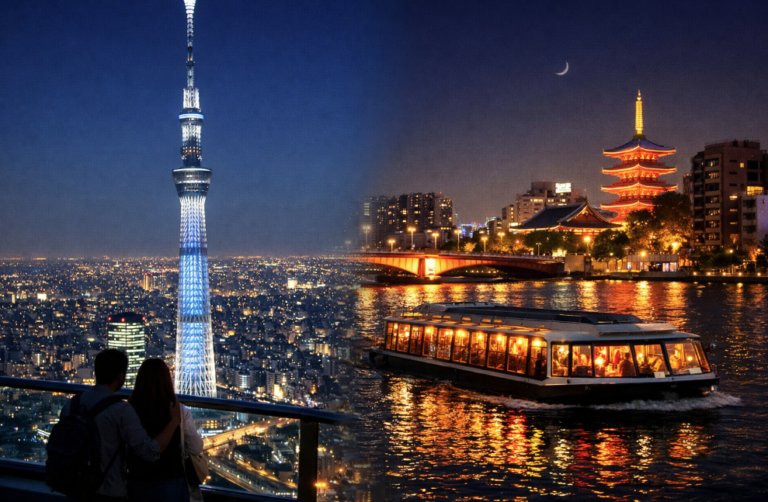
Tokyo’s streets are an electrifying maze of crowds, lights, and energy. But what if you could see the city’s best sights from a place of total calm? A scenic river cruise offers a front-row seat to the Tokyo skyline, letting you glide past famous landmarks without the hustle. It’s one of the most relaxing and photogenic ways to travel between the city’s top destinations.
What are Sumida River boats?
Think of the Sumida River as a liquid highway connecting two of Tokyo’s most famous districts. This popular sightseeing cruise serves as a water taxi. It takes you from the traditional area of Asakusa to the modern waterfront near the Rainbow Bridge.
You can choose a fast boat ride, a trip on a stylish “spaceship” boat created by a famous anime artist, or a relaxing dinner on a boat with lanterns. From the water, you can take clear photos of the entire Tokyo Skytree. You also get to pass over a dozen interesting bridges.
This guide covers how to choose the perfect boat, understand the routes, and know exactly what you’ll see, ensuring you find the best experience for your trip.
Quick connectivity tip (before you head to the river)
Tokyo’s riverboats are meant to feel like a break from the city—but the few minutes before boarding can get hectic if you’re trying to find the right dock, translate a sign, or figure out where you’ll end up after you disembark. Having a steady connection makes those small steps simple, so the cruise stays the relaxing part of your day.
If you still need data for Japan, Genki Mobile gives you three easy ways to set it up:
- Pocket Wi‑Fi: Best for groups or multiple devices (everyone connects to one hotspot). Great if you’re hopping between maps, translation, and uploads all day.
- eSIM: Best if your phone supports eSIM and you want the lightest setup (no extra device). Quick to activate and ideal for solo travelers.
- Physical SIM card: Best if you prefer a traditional swap-in option or your phone doesn’t support eSIM.
Now that you are all set up, let’s dive in!
Which Tokyo River Cruise Is Right for You? A 3-Way Comparison
Choosing your boat on the Sumida River isn’t just about getting from A to B; it’s about picking your own mini-adventure. Do you want a simple, scenic ride that’s easy on the wallet, a trip inside a futuristic “spaceship,” or a traditional floating dinner party? Each option offers a completely different way to experience Tokyo’s waterfront. Making the right choice is the first step to a perfect cruise.
To find the best Sumida River cruise for your trip, consider what matters most to you: budget, style, or a full dining experience.
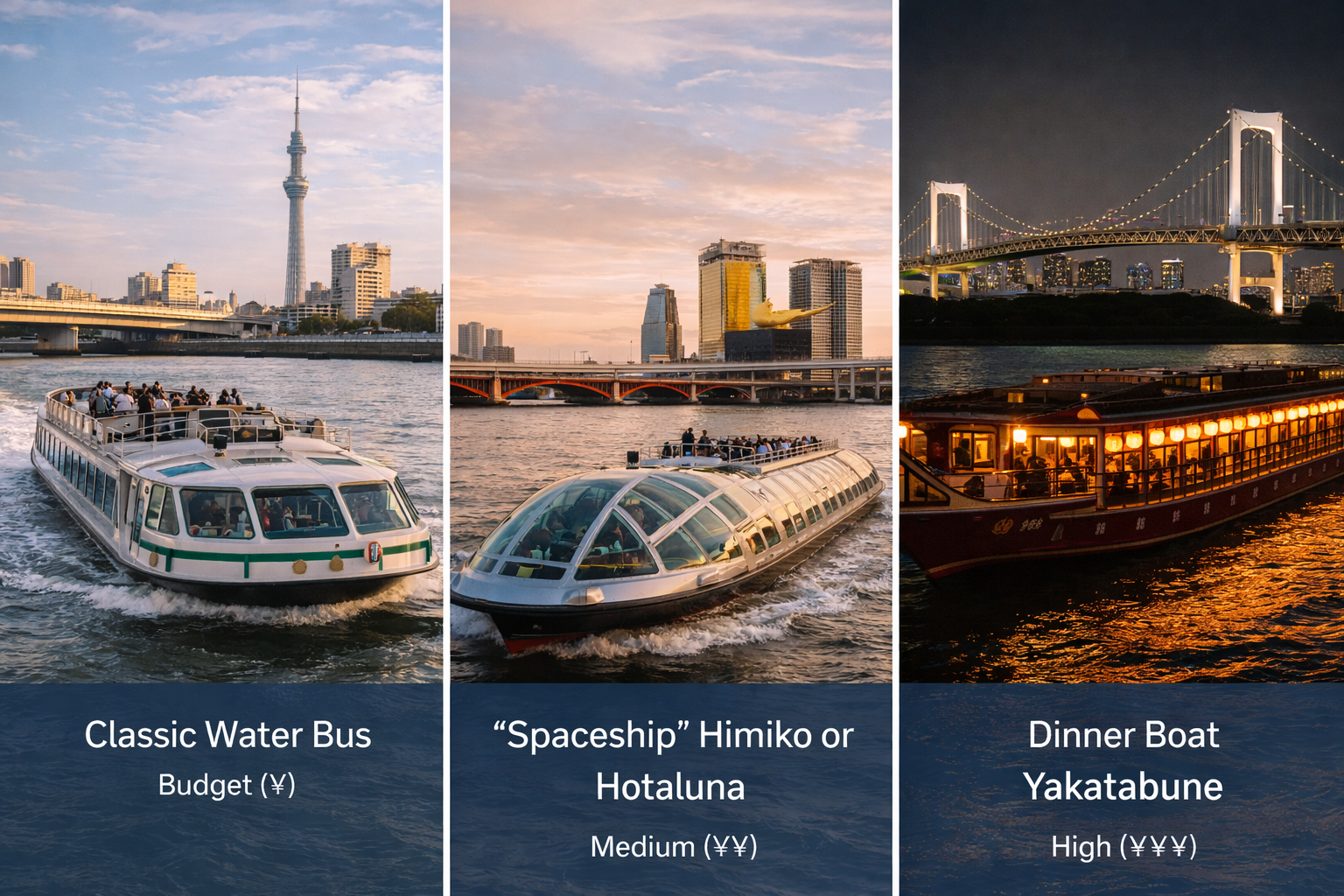
The Classic Water Bus
- Best for: Budget travelers, photographers, and those who want flexibility.
- Experience: A functional and affordable boat, much like a scenic water taxi. Its key feature is an open-air top deck, perfect for taking unobstructed photos.
- Typical Cost: Low (¥)
The ‘Spaceship’ (Himiko & Hotaluna)
- Best for: Families with kids, anime fans, and comfort on a rainy or hot day.
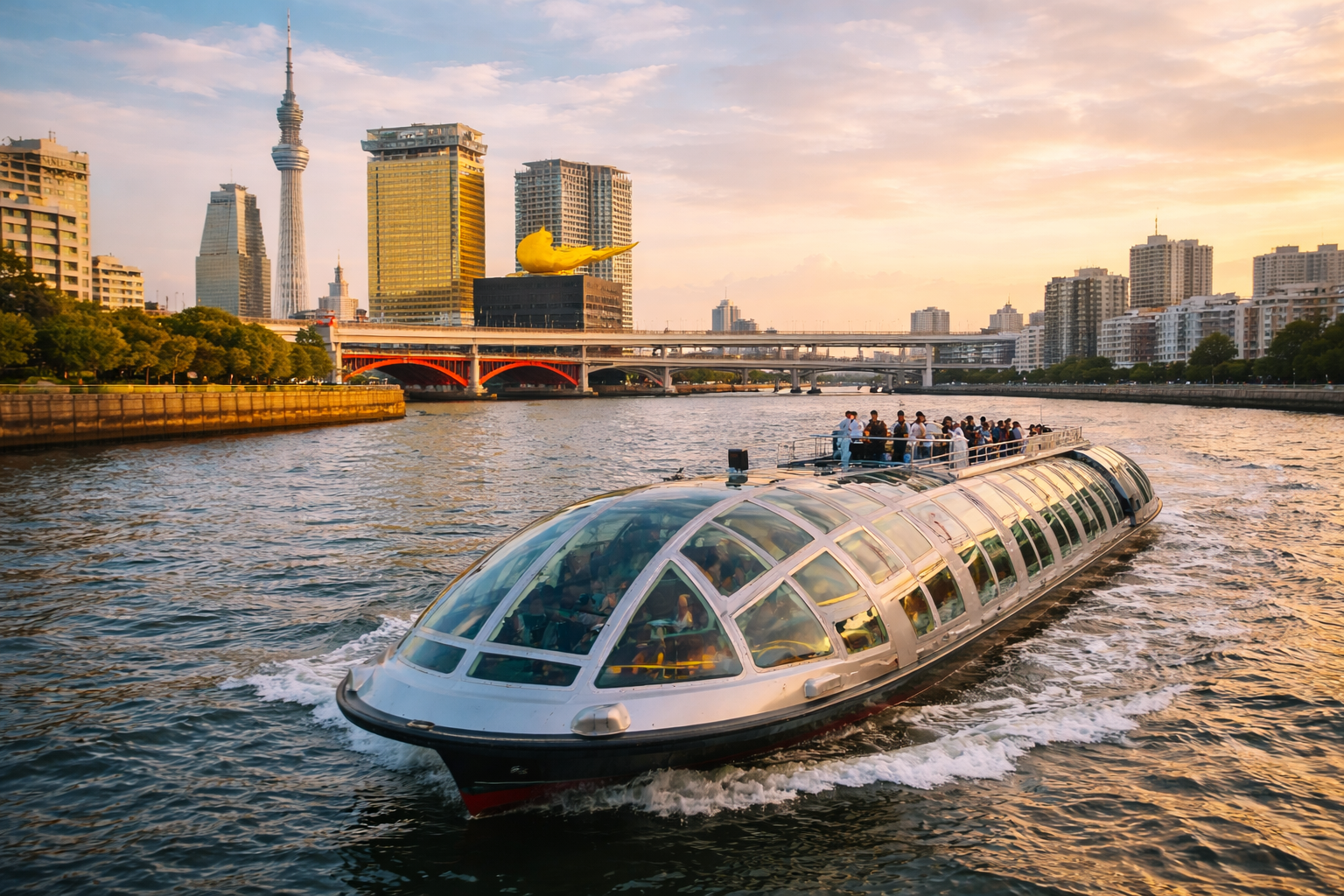
- Experience: Designed by a famous anime artist, these sleek, low-slung boats feel like something from the future. You’ll see the sights through huge panoramic windows. The Hotaluna model also has a small open-air deck at the back.
- Typical Cost: Medium (¥¥)
The Dinner Boat (Yakatabune)
- Best for: Romantic evenings, special occasions, and travelers seeking a cultural experience.
- Experience: A traditional, lantern-lit boat where you enjoy a full Japanese dinner and drinks over a leisurely 2-3 hour cruise, usually at night.
- Typical Cost: High (¥¥¥)
The biggest difference between a yakatabune vs a water bus in Tokyo is purpose. A yakatabune is a floating restaurant and an entire evening’s event, not just a tour. In contrast, the classic Water Bus and the futuristic Hotaluna are designed for sightseeing and transportation, typically taking less than an hour. The Hotaluna cruise experience is a unique attraction in itself, while the standard bus is all about the classic, open-air view.
Once you’ve decided on a style, it’s time to look at where you’ll go. Most travelers opt for the route connecting Tokyo’s historic heart with its modern waterfront.
The Classic Route: What to Expect on the Asakusa to Odaiba Cruise
The most popular Tokyo water bus journey feels like traveling through time, and it all starts in Asakusa. The main pier is just a stone’s throw from the famous Senso-ji Temple, making it easy to combine a morning of cultural exploration with an afternoon on the water. This route, which takes you from Tokyo’s historic heart to its futuristic bay, is the perfect way to see how the city’s past and present coexist. It’s a 60-minute trip that shows you more of Tokyo’s diverse landscape than you could ever see from the train.
As your boat pulls away from the pier, the first iconic view immediately snaps into focus. You’ll glide past the bright red Azuma-bashi Bridge with the towering Tokyo Skytree on one side and the quirky Asahi Beer Hall headquarters—famous for its golden “flame” sculpture—on the other. This is one of the most photographed scenes on the Sumida River and a perfect snapshot of modern Tokyo. As you continue south, you’ll pass under more than a dozen unique bridges, watching the scenery gradually shift from low-rise neighborhoods to glittering downtown skyscrapers.
Odaiba: Where the City Meets the Sea
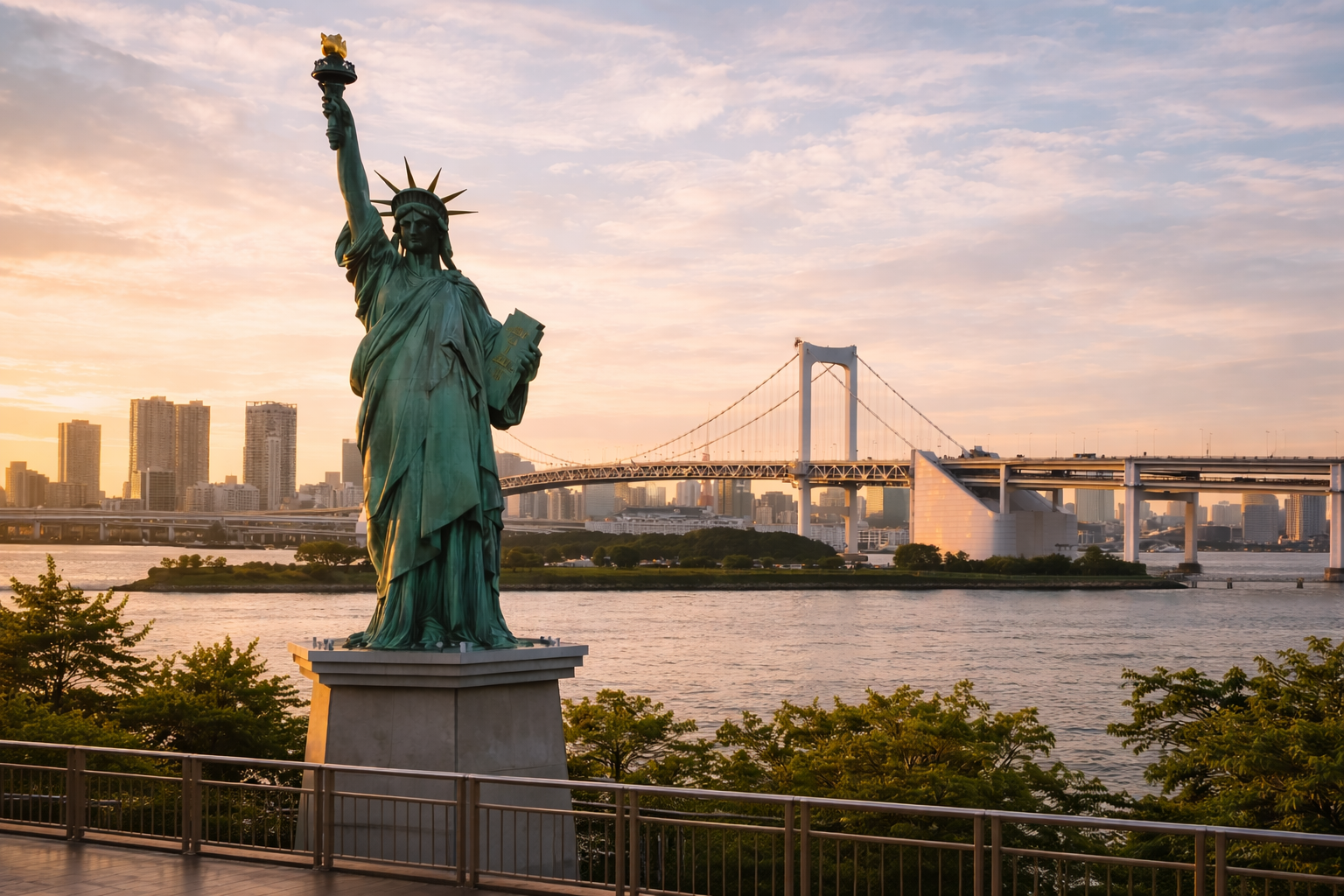
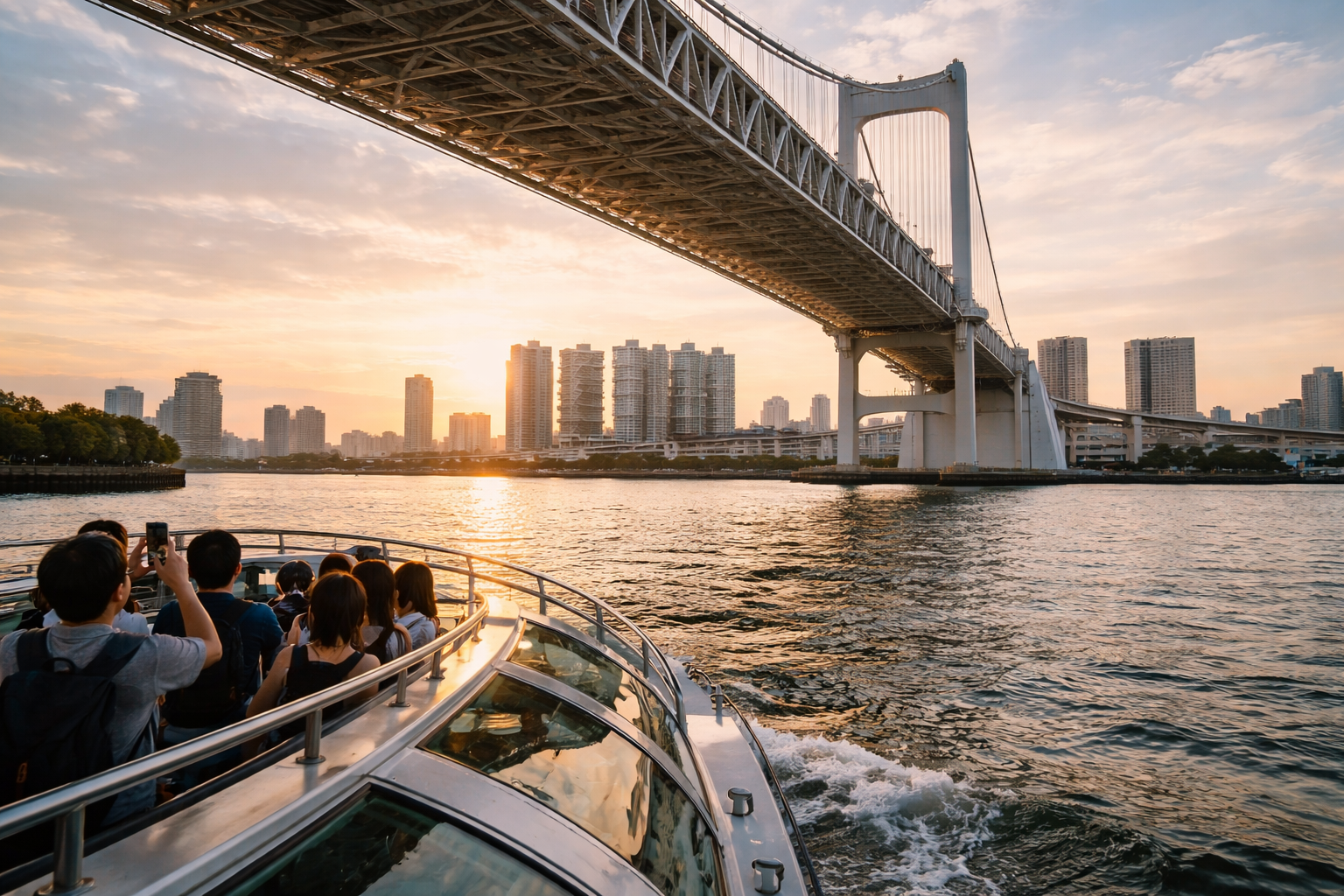
The final leg of the journey is the most dramatic. As the river widens into Tokyo Bay, the massive, elegant Rainbow Bridge comes into view, signaling your arrival at Odaiba. This man-made island is a futuristic entertainment hub, home to giant shopping malls, the iconic Fuji TV Building, and even a replica of the Statue of Liberty. Disembarking here leaves you perfectly positioned to explore Tokyo’s high-tech playground. While these sights are impressive in daylight, they take on an entirely different magic after dark.
If you want to learn more about this trip be sure to check out our in depth guide: Asakusa to Odaiba Sumida river boat guide.
Day Cruise vs. Night Cruise: When Is the Best Time to Go?
Choosing a daytime cruise offers the clearest views and the best opportunities for photography. Every bridge, building, and landmark stands out in crisp detail against the sky, allowing you to appreciate the city’s architecture and vibrant energy. This is especially true in late March and early April, when a Sumida River cherry blossom cruise provides a front-row seat to the stunning pink-and-white blooms lining the riverbanks. If your goal is to capture postcard-perfect shots and see Tokyo in its full, bustling glory, the day cruise is your best bet.
As the sun sets, however, the experience transforms entirely. A night cruise is less about identifying specific sights and more about soaking in the dazzling atmosphere. The night view from a Tokyo Bay cruise is truly spectacular, as the city’s skyline comes alive with millions of lights that shimmer and reflect on the water. Watching the fully illuminated Rainbow Bridge glide by creates a magical and often romantic mood that you simply can’t get during the day.
Quick guide to make decision
Ultimately, your decision comes down to what you want from the experience.
- To take crisp photos and seasonal sights like cherry blossoms, go during the day.
- For a romantic evening surrounded by a glittering cityscape, the night cruise is unbeatable.
- On a truly special occasion, you might even consider a traditional dinner cruise on Sumida River, combining the stunning views with a memorable meal on the water.
How to Book Your Sumida River Cruise: Tickets, Piers, and Prices
Securing your spot on a Sumida River cruise is straightforward. For popular times like weekends, holidays, or during cherry blossom season, it’s wise to book online in advance through the official operator’s website. This guarantees your seat and helps you avoid long lines. If you’re traveling on a weekday or have a more flexible schedule, you can easily purchase same-day tickets directly at the pier’s ticket counter. Staff are helpful, and signs often have English translations.
The water buses depart from several key piers that are conveniently located near major attractions. Think of them as the train stations of the river. You won’t have to search hard to find them.
Key Pier Locations
- Asakusa Pier: The most popular starting point, just a 2-minute walk from Senso-ji Temple’s famous Kaminarimon Gate. It’s right next to the red Azuma-bashi Bridge.
- Hinode Pier: A central hub connecting many routes. It’s near Hamarikyu Gardens and offers access to Odaiba and Tokyo Bay.
- Odaiba Marine Park Pier: Located in the futuristic Odaiba district, right beside the sandy beach and the iconic Fuji TV building.
- Toyosu Pier : Located near Toyosu Market and the waterfront redevelopment area. Some routes connect Toyosu with Asakusa or Odaiba. It’s convenient if you’re visiting TeamLab Planets or exploring the modern bay area.
Ticket and Prices
In terms of cost, the cruises offer great value. A standard one-way trip, like the popular 40-minute journey from Asakusa to Hinode Pier, typically costs around ¥1,000 to ¥1,200 for an adult. A full trip all the way to Odaiba is closer to ¥2000.
For an accurate Tokyo river cruise price comparison and the latest Asakusa pier boat schedule, it’s always best to check the Official Website of Tokyo Cruise before you go.
With your ticket and pier location sorted, you’re almost ready to set sail. The process is designed to be simple for travelers, letting you focus less on logistics and more on the amazing views ahead.
5 Insider Tips for the Best Tokyo Water Bus Experience
A little planning can transform your boat trip from a simple ride into a highlight of your Tokyo adventure. To get the most out of your time on the water, keep these five simple tips in mind.
- Pick the Right Side of the Boat: If you’re wondering what to see on a Sumida River cruise, your seat matters! For the popular southbound trip from Asakusa, try to get a spot on the right (starboard) side. This gives you the best, unobstructed views of the central Tokyo skyline and Hamarikyu Gardens.
- Check the Schedule Online—Always: The schedule can change, and special boats run less often. A quick check on the official site confirms departure times and tells you how long the Tokyo water bus ride will be, preventing any surprises.
- Arrive Early for the Best Seats: Seating is generally first-come, first-served. Arriving 15-20 minutes before departure gives you a better chance to snag a prime spot, especially if you want a seat on an open-air upper deck.
- Pair Your Cruise with Sightseeing: The piers are perfectly placed for a full day of fun. Explore Senso-ji Temple in the morning before your cruise from Asakusa, or take the boat to Odaiba for an afternoon of futuristic architecture and shopping.
- Consider the Weather: On a beautiful day, nothing beats an open-deck boat for photos. If it’s rainy or cold, the enclosed boats with their massive windows provide a cozy and equally scenic alternative.
With these tips for taking the Tokyo water bus, you’re ready to see the city from its most relaxing vantage point.
Your Perfect Sumida River Cruise Awaits
The Sumida River offers a scenic highway through the heart of the city, connecting ancient temples to futuristic islands. Choosing the right cruise for your trip, budget, and style is simple when you know your options.
For a quick, affordable, and classic trip with fantastic photo opportunities, the standard water bus is your perfect match. If a unique, sci-fi-inspired ride that kids and modern design fans will love is more your speed, book a ticket for the futuristic Hotaluna. And for a special, romantic evening, the gentle glow of a traditional yakatabune dinner cruise creates a truly unforgettable memory.
Whether you’re gliding past skyscrapers or floating under spring blossoms, a river cruise in Tokyo offers a perspective you can’t get anywhere else. Choose your adventure, book your ticket, and enjoy the ride.
Create your perfect Tokyo Day
Whether you take the Sumida River boat in the daytime or after dark, it’s easy to build the rest of your Tokyo plans around it. If you want a simple, step-by-step route that pairs the cruise with two of the city’s best neighborhoods, head to Day trip in Ueno and Asakusa: Optional Skytree or Sumida River Evening and use it as your “anchor” itinerary for the day.
For more practical Tokyo day trips and guides to iconic landmarks, browse Genki Mobile’s Japan Travel Blogs for trip ideas you can plug straight into your schedule.
Q&A
Question: How do I choose between the Classic Water Bus, the “Spaceship” boats, and a yakatabune?
Short answer: It depends on your priorities. The Classic Water Bus is budget-friendly and offers an open-air top deck for unobstructed photos. The sleek “Spaceship” boats (Himiko & Hotaluna), designed by a famous anime artist, have huge panoramic windows—great for families, fans, and bad weather; Hotaluna also has a small open-air deck. A yakatabune is a traditional, lantern-lit dinner cruise (2–3 hours) focused on dining and ambiance—ideal for special occasions. In short: Water Bus = affordable sightseeing, Spaceship = stylish comfort, Yakatabune = full evening dining experience.
Question: What’s the classic route, and how long does it take?
Short answer: Most travelers ride from Asakusa (near Senso-ji Temple) to Odaiba, a roughly 50-minute journey that feels like time-travel from historic Tokyo to its futuristic bay. A shorter hop from Asakusa to Hinode Pier takes about 40 minutes. These routes double as scenic “water taxis,” letting you sightsee while you move between major areas.
Question: What will I see along the way?
Short answer: Right after departure you’ll pass the red Azuma-bashi Bridge with Tokyo Skytree and the Asahi Beer Hall’s golden “flame”—one of the river’s most iconic photo ops. You’ll glide under more than a dozen unique bridges as views shift from low-rise neighborhoods to skyscrapers. Approaching Tokyo Bay, the Rainbow Bridge signals arrival at Odaiba, home to the Fuji TV Building and a replica Statue of Liberty. For the best skyline and Hamarikyu Gardens views on the southbound trip from Asakusa, sit on the right (starboard) side.
Question: Is daytime or nighttime better for a cruise?
Short answer: Go by day for crisp, detailed views and the best photography—especially in late March to early April during cherry blossom season. Choose night for atmosphere: the skyline shimmers, and the illuminated Rainbow Bridge is spectacular and romantic. For a special occasion, a nighttime yakatabune dinner cruise combines the views with a memorable meal.
Question: How do I book, where are the piers, and what does it cost?
Short answer: Book online in advance for weekends, holidays, and cherry blossom season; otherwise, same-day tickets at the pier are easy, with helpful staff and English signage. Key piers include Asakusa (by Kaminarimon Gate and Azuma-bashi), Hinode (near Hamarikyu Gardens; a central hub), and Odaiba Marine Park (by the beach and Fuji TV). Expect about ¥1,000–¥1,200 for Asakusa → Hinode and around ¥2,000 to go all the way to Odaiba. Always check the official Tokyo Cruise Ship Co. website for current schedules and prices.