

Packing for Japan looks easy—until you actually start thinking about it.
Japan is modern, safe, and incredibly organized. So many travelers assume they can just “figure things out when they arrive.” In reality, Japan rewards preparation.
This Japan packing list is written to help you feel calm, prepared, and confident before your flight. Here is your full guide for things to bring to Japan and how it affects your daily experience, whether you’re exploring Tokyo or traveling across the country.
Why packing well before your Japan trip is important?
Japan often appears on social media as calm, quiet, and perfectly orderly. That image isn’t wrong—but it’s incomplete.
Once you land, you’ll quickly notice that:
- Stations are huge and busy, with multiple exits and platform
- Trains arrive exactly on time, and missing one can throw off your plans
- Locals move with purpose, already knowing where they’re going
- You’re constantly switching between walking, trains, stairs, and transfers
Trying to solve problems on the go – like slow internet, uncomfortable shoes, or missing essentials -adds unnecessary stress. Packing well lets you match Japan’s pace instead of fighting against it. The better prepared you are, the smoother and more enjoyable your trip becomes.

What are the Japan Travel essentials?
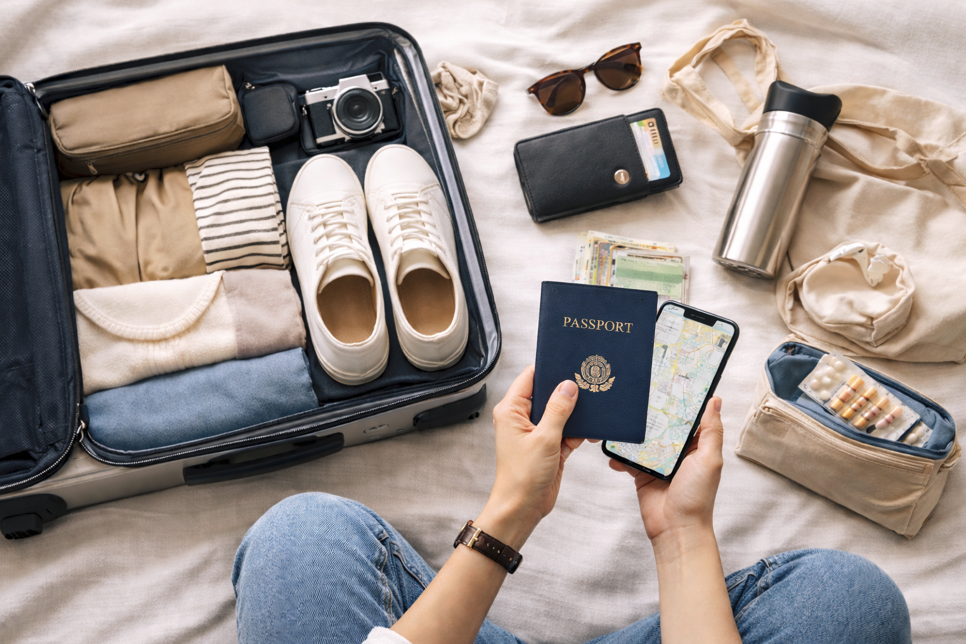
These are the core items you’ll rely on every single day in Japan, regardless of season or city. Packing these correctly makes daily movement smoother and removes a lot of unnecessary stress.
Passport (with digital backups)
Your passport is required not just at immigration, but sometimes for tax-free shopping as well. Keep a digital copy on your phone or cloud storage in case of loss.
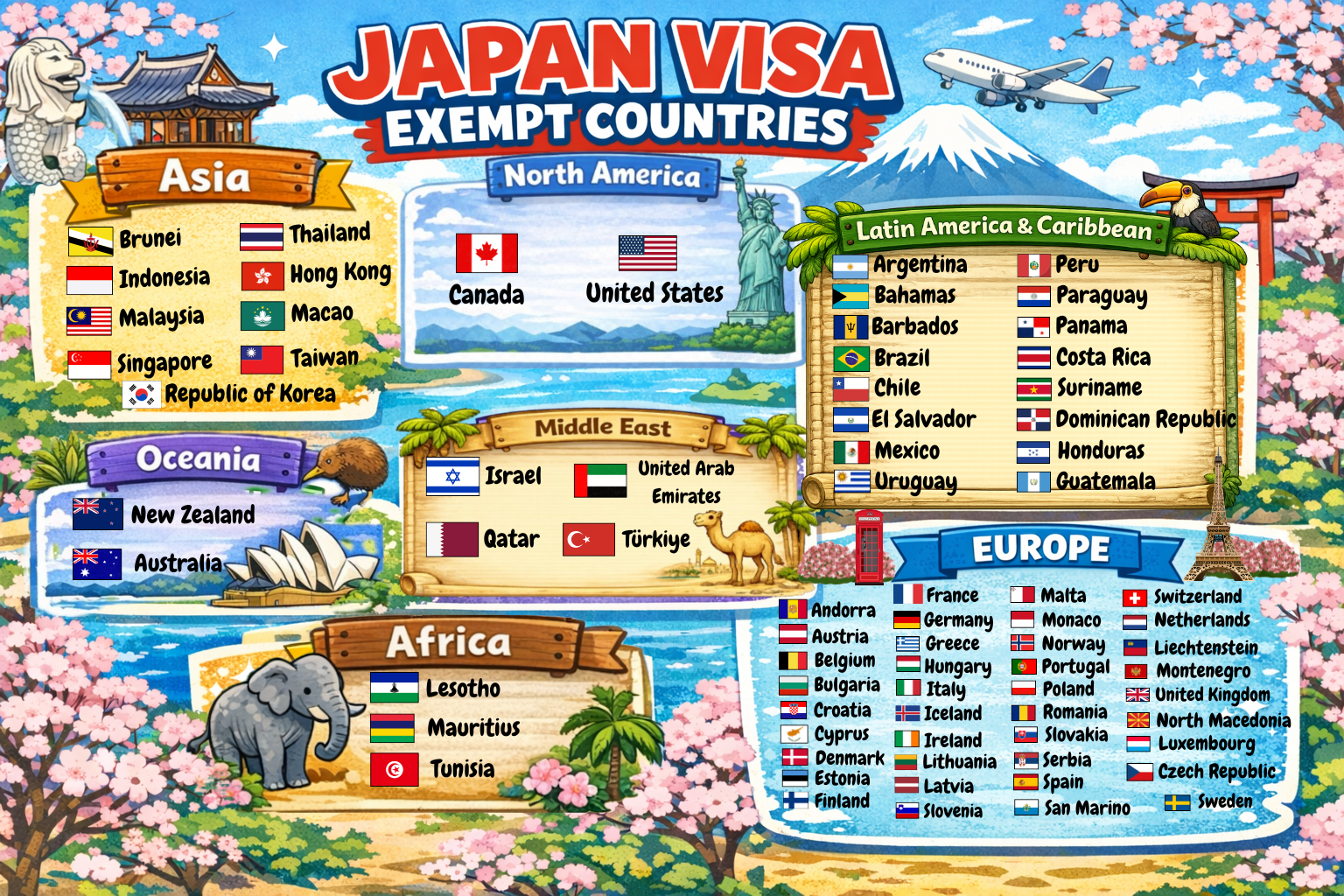
Since we mentioned passports here, check if your country is visa exempt for short-term stay in Japan.
Wallet with cash + cards
Japan is modern, but cash is still widely used, especially at small restaurants, local shops, and rural areas. Coins are common, so a wallet that handles change well is more practical than a slim credit card holder.
Or, you can find tiny coin pouches with various styles at any 100-yen stores such as Daiso or Seria.
Comfortable walking shoes
This is one of the most important items on any Japan packing list. Large stations, long transfers, and full sightseeing days mean you’ll walk far more than expected. Prioritize comfort over style—your feet will thank you by day two.
Day bag or small backpack
A lightweight backpack or crossbody bag is ideal for carrying essentials like water, snacks, a power bank, and souvenirs. Japan is safe, but compact bags are easier to manage on crowded trains.
Reusable tote or foldable bag
Many shops charge for plastic bags, and you’ll often make small purchases throughout the day. A foldable tote is surprisingly useful for convenience store stops, shopping streets, and carrying souvenirs.
Trash bins are not easy to find in Japan. So tote bags can also temporarily store your trash until you find one.
Personal medications
Some common medicines are difficult to find or labeled differently in Japan. Bring enough of what you regularly use, along with prescriptions if necessary, to avoid confusion.
What are useful apps for Japan Trip?
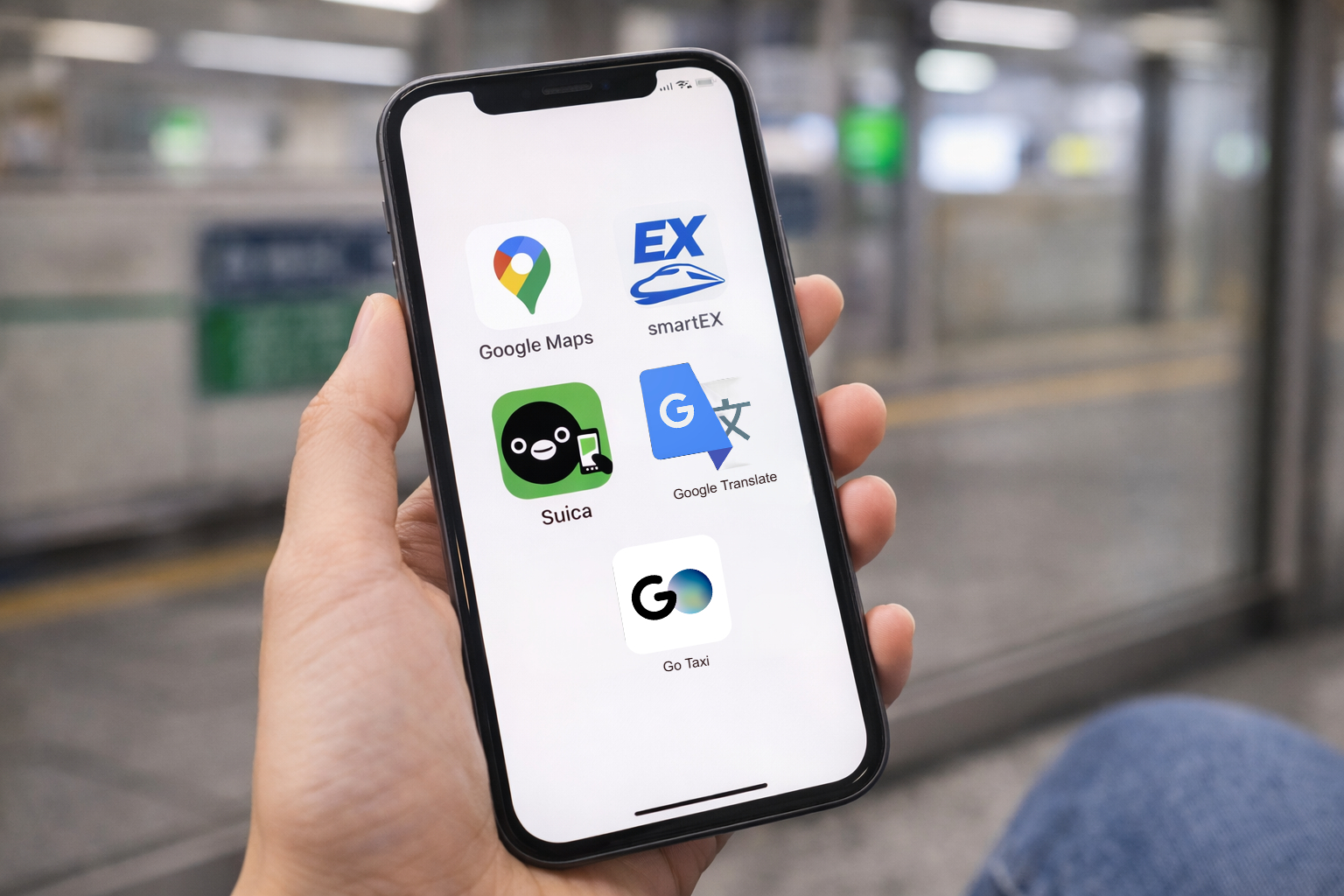
Installing the right apps before you arrive in Japan can save you hours of confusion, especially during your first few days. Japan’s transport system is incredibly efficient, but it assumes you already know how to use it. These apps help bridge that gap and make daily travel much smoother.
Google Maps
This is the single most important app for getting around Japan. It shows train lines, platform numbers, transfer times, and even which station exit to use.
For deeper guidance on Tokyo subway lines , see our Tokyo Metro map guide.
Download Google Maps on Android
Download Google Maps on IOS
smartEX
If you plan to ride the Shinkansen, this app allows you to reserve, change, and manage bullet train tickets digitally.
Download smartEX on Android
Download smartEX on IOS
Suica app
The digital version of Japan’s most widely used IC card. With Suica on your phone, you can pay for trains, buses, vending machines, convenience stores, and even some restaurants.
Download Suica App on Android
Download Suica App on IOS
Google Translate
Extremely useful for menus, signs, and quick translations when English isn’t available. Download the Japanese language pack for offline use before arriving, so you’re not stuck if your connection drops.
Download Google Translate on Android
Download Google Translate on IOS
GO/Taxi app
Helpful late at night, during bad weather, or when public transport has stopped running. Quick Note: Taxis in Japan are clean and reliable, but they are significantly more expensive than trains.
Download GO/Taxi on Android
Download GO/Taxi on IOS
Most travelers don’t realize that nearly all these apps rely on constant internet access. Losing connection inside a large station can instantly turn a simple transfer into a stressful situation. To avoid that, jump ahead to the Getting connected to mobile Wi-Fi in Japan section below.
How is Japan weather and what should you wear?
Understanding Japan weather is key to packing correctly. Japan has four distinct seasons, and temperatures can change more than expected throughout the day.
Year-round clothing basics
Regardless of season, layering is your best strategy:
- Breathable tops you can layer easily
- One warm outer layer, even in spring or fall
- Pants or skirts suitable for long walking days
- Comfortable socks (you’ll remove shoes frequently)
- A compact umbrella or light rain jacket
Japan Travel Summer essentials
Summer in Japan is hot, humid, and intense, especially in cities like Tokyo and Osaka.
Expect sticky heat, crowded trains, and lots of walking. Many locals carry cooling items to cope with the weather.
Useful items include:
- Lightweight, breathable clothing
- Portable fan
- Cooling wipes or towels- Well known brands include : Biore , Gatsby
- Sunscreen and a hat
- Extra shirts for changing
Japan Travel Spring/Sakura essentials
Spring is popular for cherry blossom season, but weather can be unpredictable.
Days can feel warm, while mornings and evenings stay cool. Packing flexible layers helps you stay comfortable.
Helpful items include:
- Light jacket or trench coat
- Allergy medication (pollen is common)
- Comfortable shoes for long walks under cherry trees
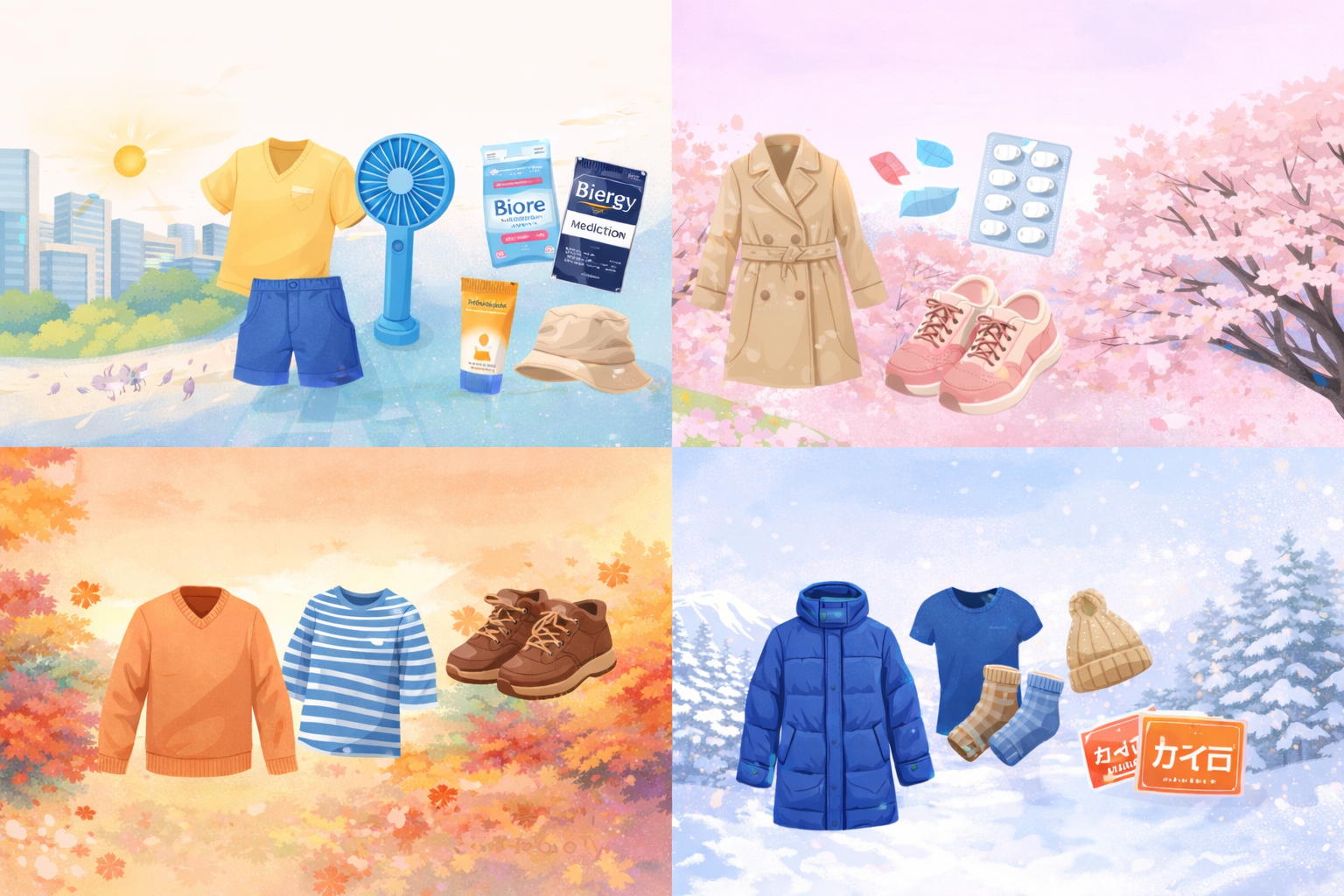
Japan Travel Fall essentials
Fall is one of the most comfortable times to visit Japan.
Temperatures are mild, crowds are manageable, and walking is pleasant. You won’t need heavy clothing, but layers are still useful.
Items to consider:
- Light sweaters
- Long-sleeve shirts
- Comfortable shoes with good grip
Japan Travel Winter essentials
Winter varies depending on where you travel, but cities can get quite cold.
Even if it doesn’t snow, wind and low temperatures can feel harsh, especially at night.
Useful winter items include:
- Warm coat
- Heat-retaining inner layers
- Gloves, scarf, and hat
- Disposable heat packs (kairo)
What electronics are needed in Japan?
Japan uses Type A plugs and operates on 100V electricity.
So it’s smart to bring:
- A universal power adapter
- Power bank for long navigation days
- Charging cables for all devices
- Camera and accessories if you plan to take photos
- Keeping devices charged is especially important when relying on maps and travel apps.
Getting connected to mobile Wi-Fi in Japan
Internet access isn’t a luxury in Japan—it’s a necessity.
Navigation, translation, train planning, payments, and even restaurant reservations often rely on being online. While public Wi-Fi exists, it’s inconsistent and unreliable when you need it most.
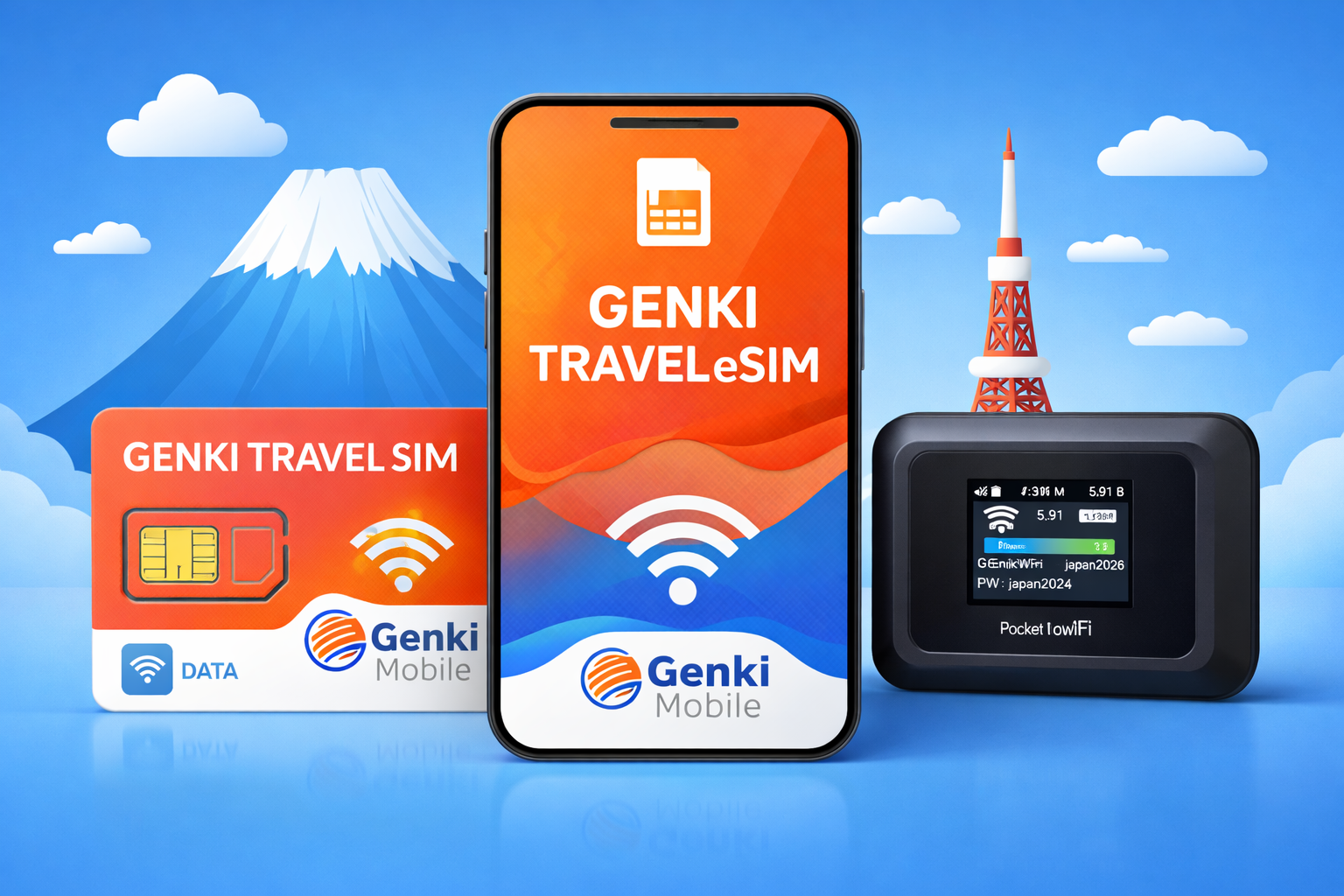
Many travelers prepare by arranging:
- Pocket Wi-Fi
- Travel eSIM
- Travel SIM
A stable connection helps you stay calm, especially in large stations or unfamiliar neighborhoods. Options like Genki Mobile are popular among travelers. They want reliable internet access during their trip. This way, they do not have to search for Wi-Fi all the time.
Souvenirs
Japan is famous for its souvenirs, from regional snacks to stationery, cosmetics, and unique gifts.You may spend thousands of yen with just one visit to don quijote aka Donki.
One of the most overlooked packing tips is simply this: leave space in your luggage. You’ll almost certainly buy more than expected.
Last but not least: Do I need visa to enter Japan?
Before finalizing your trip, confirm whether your passport allows visa-free entry to Japan. Many countries are exempt for short-term stays, but rules can change.
Because visa policies are updated regularly, always check the Ministry of Foreign Affairs of Japan (MOFA) website for the latest information before departure.
Conclusion
A good Japan packing list isn’t about bringing everything—it’s about bringing what helps you move smoothly through the country. When you’re prepared, Japan feels efficient, exciting, and enjoyable rather than overwhelming.
With the right essentials, clothing, apps, and connectivity, you can focus less on logistics and more on experiencing Japan the way it’s meant to be experienced. For more preparation tips, continue with our related Japan travel guides to plan your trip with confidence.
